Custom Iron Fence Options for Baton Rouge Homes and Businesses
Custom iron and ornamental metal fences can be designed around a property's architecture, security needs, grade, gate locations, and maintenance expectations. In Baton Rouge, material choice and coating quality also matter because humidity, rainfall, and standing water can accelerate corrosion when steel is not properly protected.
This guide explains common design options, how fence and gate systems are planned, what affects their installation, and what owners should expect in terms of long-term performance.
What Is a Custom Iron Fence?
A custom iron fence is a metal perimeter fencing system designed and fabricated to fit a specific property's dimensions, architectural style, security requirements, and gate configuration. Unlike stock panel systems, custom fabrication allows for unique picket profiles, spacing, height, and decorative elements.
It is worth noting that the term "iron fence" is used broadly in the industry. Many fences marketed as "wrought iron" are actually fabricated from ornamental steel or aluminum. Steel offers strength and flexibility for custom fabrication but requires surface preparation, high-quality coatings, and ongoing maintenance. Aluminum does not rust like steel, but product grade, connections, hardware, and structural limits still matter and should not be overlooked.
True wrought iron — hand-hammered and historically produced — is rarely used in new installations today. Understanding which material is actually being specified helps property owners set accurate expectations for appearance, cost, and upkeep.
Why Choose a Custom Iron Fence for a Baton Rouge Property?
Custom iron and ornamental metal fencing is well suited to Baton Rouge's mix of traditional and contemporary architecture, from historic Garden District homes to modern commercial developments. A custom design allows the fence to follow irregular property lines, accommodate grade changes, and integrate with gate operators or access control systems without the constraints of prefabricated panels.
Baton Rouge's subtropical climate — high humidity, heavy seasonal rainfall, and prolonged heat — places real demands on metal fencing. Properly specified and coated steel or aluminum can perform well in these conditions, but the material selection and protective finish must be matched to the environment from the start.
Key reasons Baton Rouge property owners choose custom iron and ornamental metal fencing include:
- Architectural compatibility — designs can match or complement existing ironwork, masonry, or building style
- Boundary definition — clear perimeter control for residential, commercial, and institutional properties
- Security integration — fence height, picket geometry, and gate placement can be planned around access-control requirements
- Property identity — custom fabrication reflects the owner's preferences rather than a catalog standard
- Long-term performance — properly specified and maintained metal fencing can provide a long service life, but durability depends on material grade, coating quality, drainage, installation, and maintenance
What Custom Design Options Are Available for Iron Fencing?
Custom ornamental fencing offers a wide range of design variables beyond basic picket-and-rail construction. The choices made at the design stage affect appearance, cost, fabrication time, coating coverage, and long-term maintenance access.
Common design variables include:
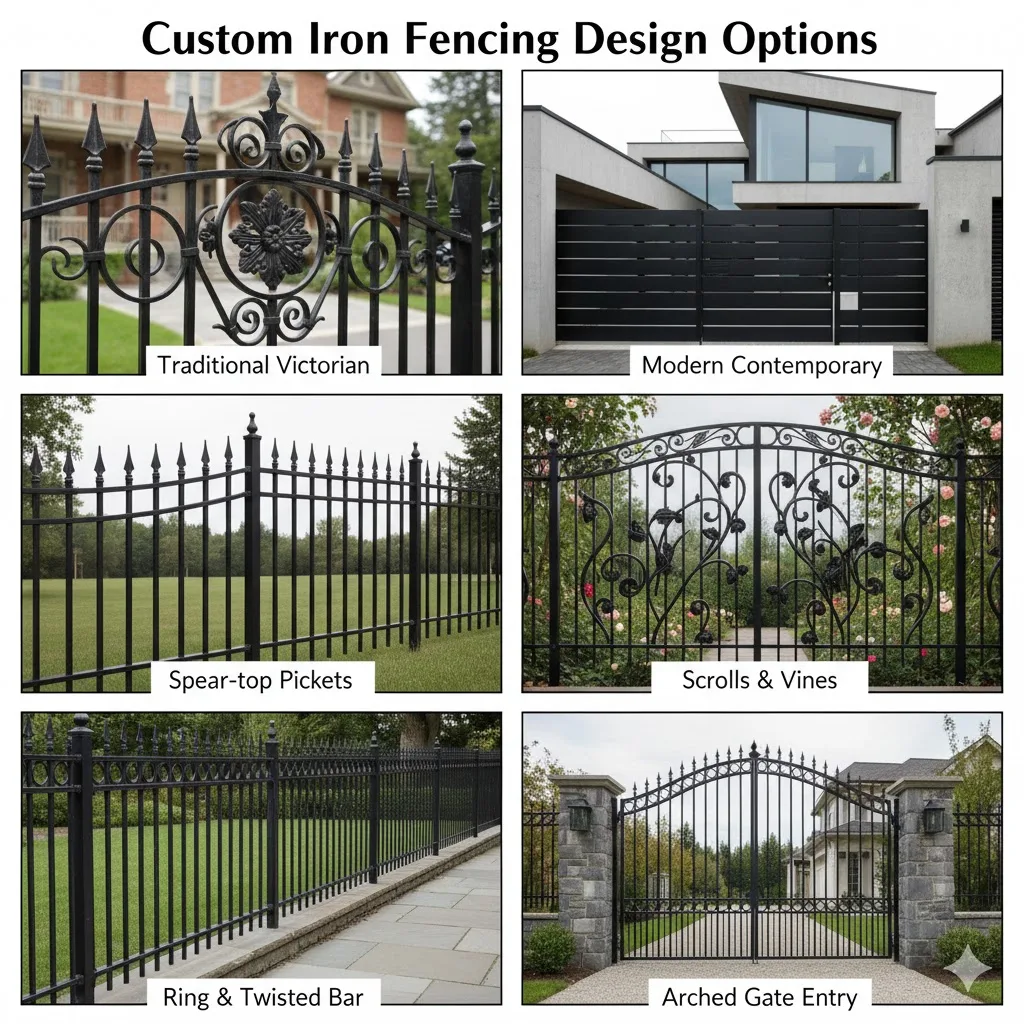
- Picket profile — flat bar, round, square, or twisted; spear point, ball top, or flat top
- Rail configuration — two-rail or three-rail systems; rail placement affects climbability and visual weight
- Panel height — typically 3 ft to 8 ft depending on security and privacy requirements
- Picket spacing — closer spacing improves security but increases material cost and surface area to coat
- Finish — powder coating is the most common protective finish for ornamental steel; color and texture options vary
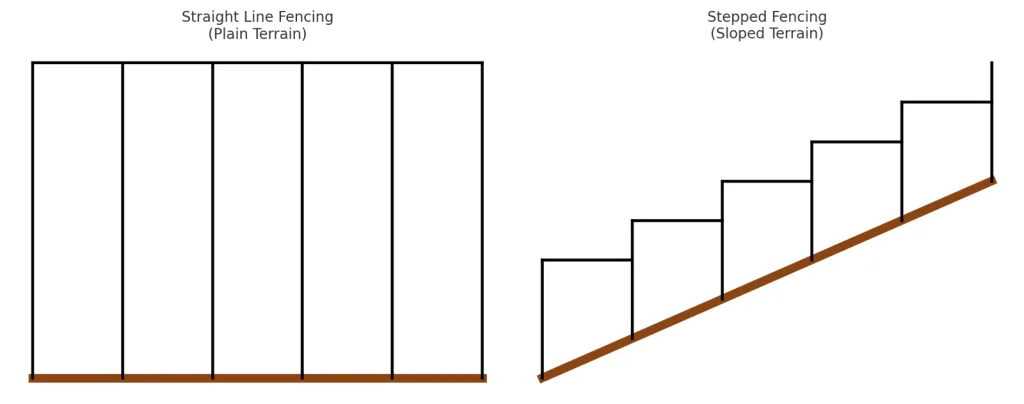
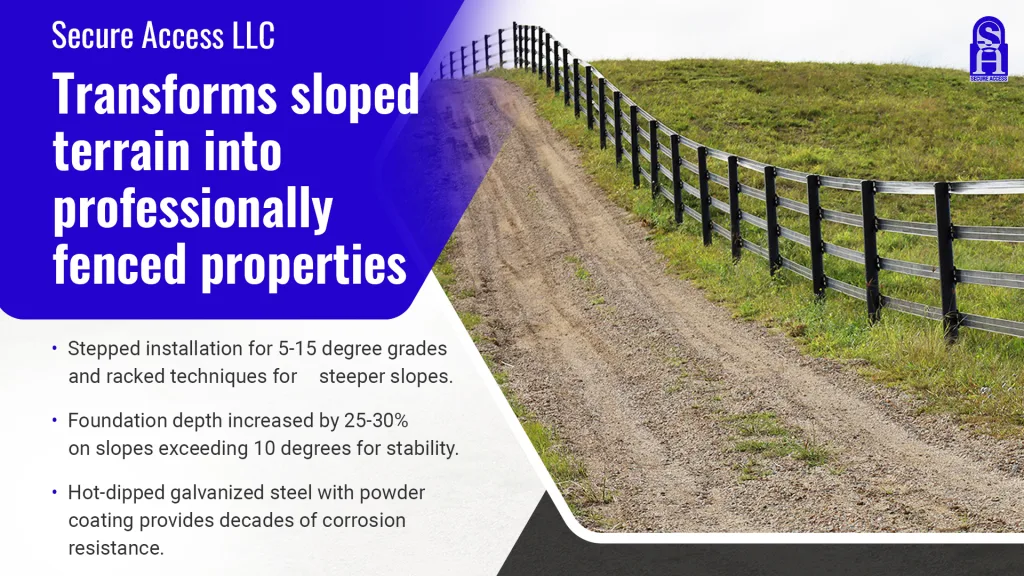
- Panel transitions on slopes — racked (angled) or stepped panels handle grade changes differently and should be specified early
Decorative Pickets, Finials, and Scrollwork
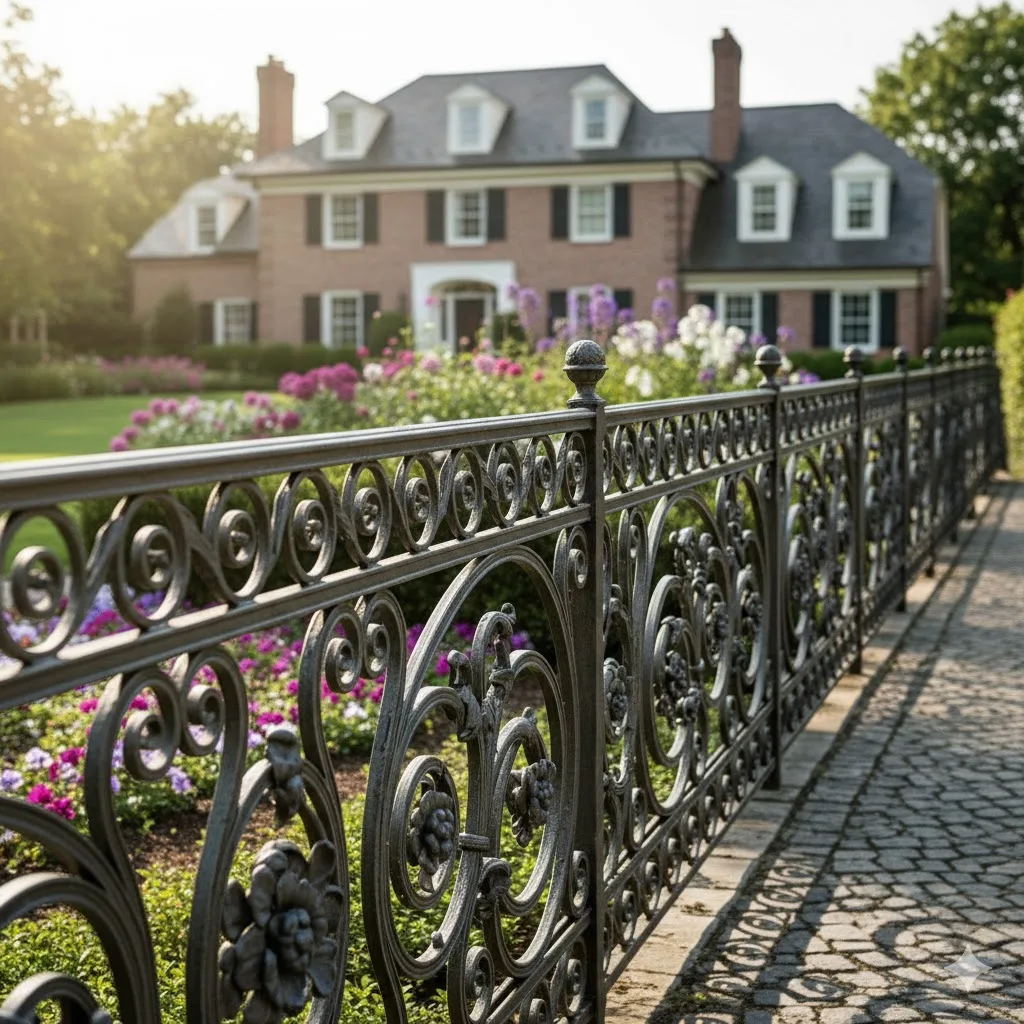
Decorative elements — scrollwork, collars, finials, and pressed spear points — add visual character and can be tailored to match architectural details. These elements should be reviewed beyond appearance.
Scrollwork, horizontal rails, spear points, close picket spacing, and heavy gate panels can affect climbability, safety, fabrication cost, coating access, and gate operator load. A design that looks attractive in a drawing may pose maintenance challenges or create unintended footholds if not reviewed for these considerations.
Custom Gates and Entryways
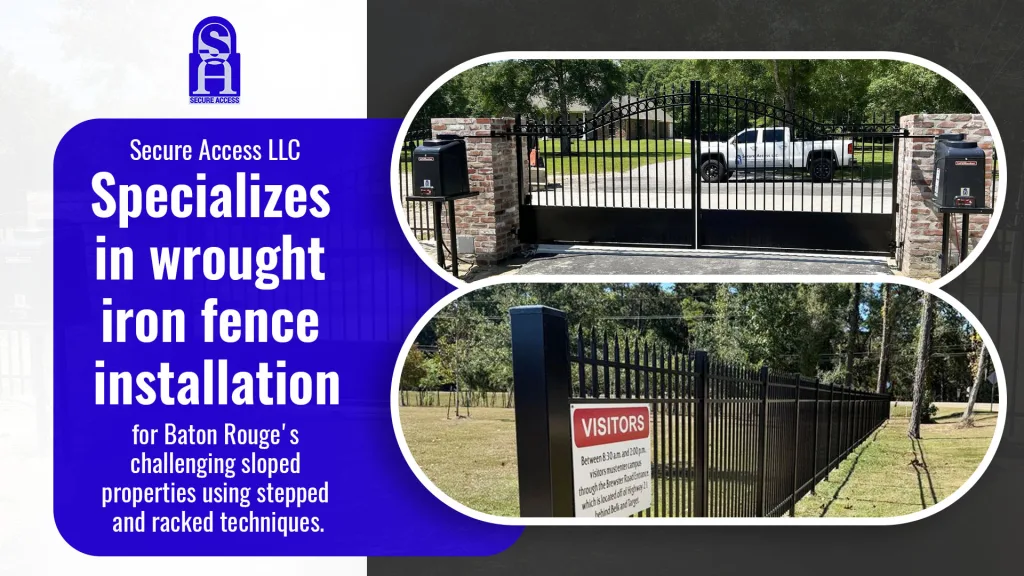
Gate design is one of the most consequential decisions in a custom iron fence project. Gate size, swing direction, panel weight, and hardware selection all affect how the gate operates and what foundation or operator system it requires.
Considerations for custom gates include:
- Swing versus slide — swing gates require clearance on the opening side; slide gates require a straight run and more post support
- Gate post sizing — gate posts carry significantly more load than line posts and require deeper footings and larger-diameter tubes
- Operator compatibility — automated gate operators have weight and size limits; gate design should be confirmed with the operator specification before fabrication
- Pedestrian access points — a vehicle gate alone is not a secure perimeter; pedestrian gate placement and hardware matter
- Manual release and emergency access — automated gates should include a manual release method in the event of power loss
Is Iron Fencing a Good Choice for Residential Homes or Commercial Properties?
Ornamental iron and steel fencing works well for both residential and commercial applications, but the right design differs by use. Understanding those differences before fabrication helps avoid costly changes later.
Residential projects often prioritize appearance, boundary definition, pool barriers, pet containment, driveway access, and compatibility with the home. Where visual screening is required, ornamental metal may need to be combined with landscaping or another privacy solution. Common residential uses include:
- Front yard and perimeter fencing for homes and estates
- Pool enclosures requiring code-compliant barrier height and self-latching gates
- Driveway gates with automated operators
- Garden walls and decorative accents
Commercial applications typically prioritize perimeter control, access management, and durability under heavier use. Commercial design may also depend on traffic frequency, gate-cycle requirements, pedestrian and emergency access, anti-climb needs, and the way the fence connects to buildings or other perimeter barriers. Common commercial uses include:
- Parking lot and facility perimeter fencing
- Security fencing for warehouses, distribution centers, and equipment yards
- Entrance gates with access-control integration (keypads, card readers, intercoms)
- Institutional fencing for schools, churches, and government facilities
For commercial projects in Baton Rouge and East Baton Rouge Parish, fence height, picket spacing, and gate configuration often need to meet site plan or permitting requirements. Confirming those requirements before design is finalized saves time and avoids rework.
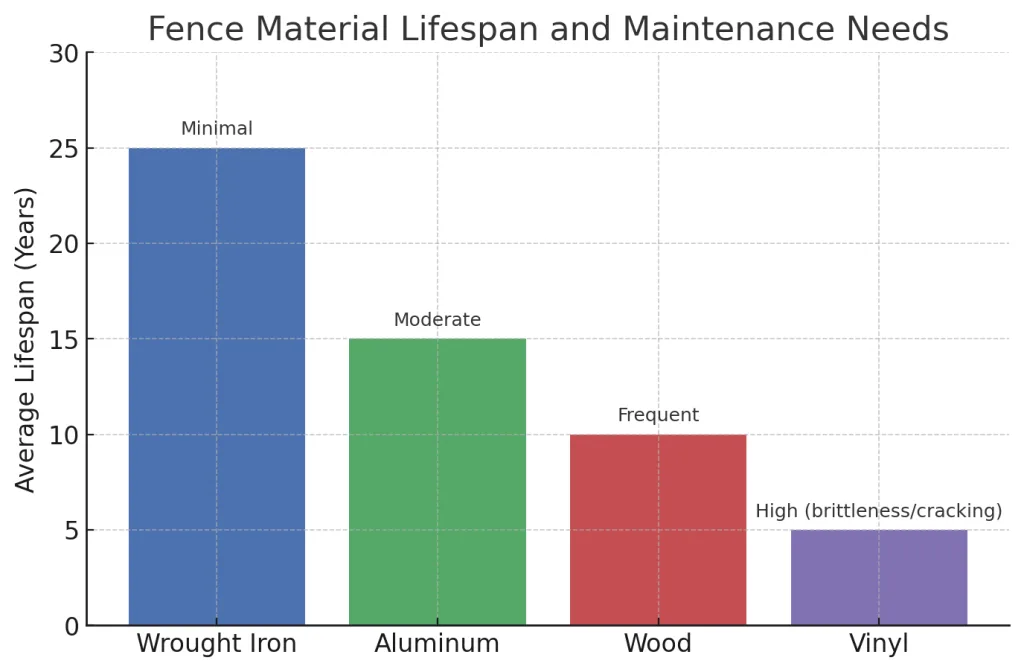
How Does Iron Fencing Compare to Aluminum and Wood?
Material selection is one of the first decisions in a fencing project and has long-term implications for performance, appearance, and maintenance requirements. The table below compares ornamental steel, aluminum, and wood across the categories most relevant to Baton Rouge property owners.
Appearance, Security, and Privacy Comparison
| Category | Ornamental Steel | Aluminum | Wood |
| Appearance | Traditional to modern; highly customizable profiles | Similar appearance to steel; lighter visual weight | Warm, natural look; wide range of styles |
| Security considerations | Strong material; performance depends on height, spacing, rails, posts, and gates | Product grade and connections must match the required load and use | Solid designs can limit access and visibility, but boards and rails require maintenance |
| Privacy | Usually open unless combined with screening | Usually open unless combined with screening | Available in solid and semi-private designs |
| Maintenance | Coating inspection and corrosion repair | Hardware, fasteners, coating, and connections require inspection | Finish, fasteners, boards, posts, and rot exposure require maintenance |
| Cost drivers | Fabrication, height, coating, gates, and design complexity | Product grade, height, gates, hardware, and style | Species, treatment, style, posts, finish, and maintenance |
Ornamental steel is typically the best fit when structural strength, custom fabrication detail, and security performance are the primary drivers. Aluminum is a practical choice when rust avoidance is the priority, and the design is relatively standard. Wood suits applications where privacy or a natural aesthetic is more important than long-term low maintenance.
How Well Do Custom Iron Fences Perform in Baton Rouge's Climate?
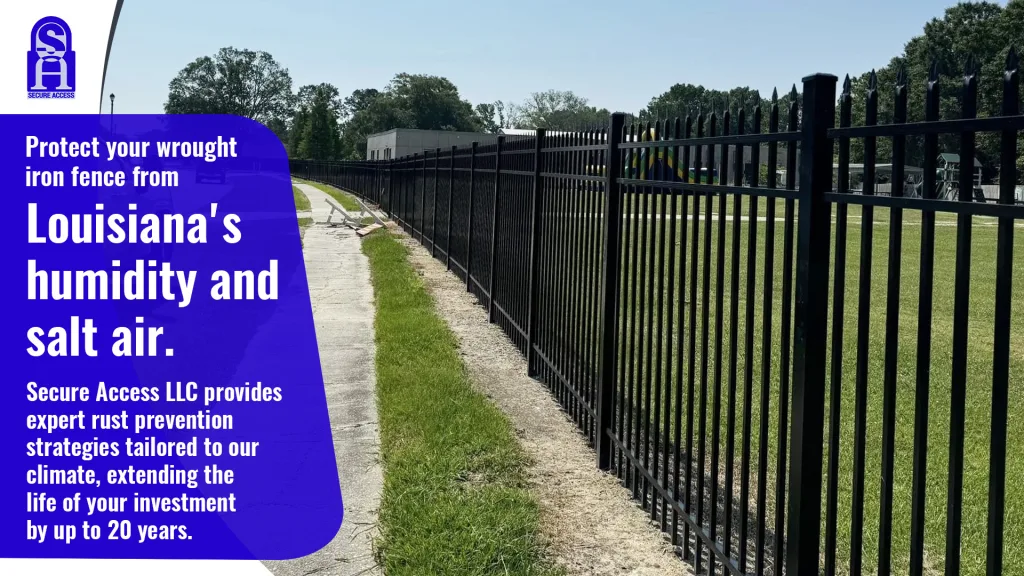
Baton Rouge's humidity, rainfall, heat, and drainage conditions can be demanding on steel fencing, particularly where coatings are damaged or water remains around post bases and connections. High humidity, heavy and frequent rainfall, prolonged heat, and standing water create conditions that accelerate corrosion if the material and coating are not properly specified.
Ornamental steel can provide long service when it is properly prepared, coated, installed, and maintained. However, exposed welds, scratches, fasteners, cut ends, and post bases remain the most vulnerable points. Water that pools around post bases — a common issue in low-lying Baton Rouge yards — can undermine even a well-coated fence over time.
Key climate considerations for metal fencing in Baton Rouge include:
- Finish system — options may include powder coating, liquid-applied coatings, galvanizing, or combined systems; the appropriate finish depends on the material, fabrication method, environment, and fabricator specifications
- Drainage around post bases — grade and drainage planning during installation reduces standing water exposure
- Weld and cut-end treatment — field cuts and welds disrupt the factory coating and should be touched up before installation is complete
- Fastener selection — stainless or coated fasteners reduce rust bleed at connection points
- Periodic inspection — catching coating failures early — before rust spreads — is the most cost-effective form of maintenance
Aluminum does not rust like steel, which is why it is sometimes specified for coastal or flood-prone properties. That said, aluminum gate hardware, hinges, and operator components still require periodic inspection, particularly in high-humidity conditions.
How Much Does a Custom Iron Fence Typically Cost?
Custom ornamental iron and steel fencing is more expensive than standard wood or chain-link fencing. The range is wide because project variables significantly affect the final price.
Fabrication and installation time also depend on these same factors. Custom gates and decorative fabrication usually require more lead time than standard panel systems. Providing a specific number without knowing the project details would not give an accurate picture.
What Factors Influence the Final Price?
The variables that most affect the cost of a custom iron fence in Baton Rouge include:
- Linear footage — total fence run length
- Fence height — taller panels require more material and heavier post sizes
- Design complexity — decorative elements, custom profiles, and scrollwork increase fabrication time and cost
- Number and size of gates — swing gates, slide gates, and double-drive gates each have different fabrication and foundation requirements
- Automation — gate operators, access-control systems (keypads, intercoms, card readers), and electrical work add cost
- Coating system — surface preparation, primer, finish type, color, and specialty treatments can affect cost
- Site conditions — difficult access, rocky or wet soil, significant grade changes, or old fence removal affect installation labor
- Permitting — some Baton Rouge neighborhoods and commercial sites require permits and inspections
Getting an accurate quote requires an on-site review of the property. Rough estimates based on footage alone often miss the factors above and can be significantly off from the final number.
Can a Custom Iron Fence Improve Curb Appeal and Property Value?
A well-designed ornamental iron fence can enhance a property's visual appeal and signal quality to visitors, neighbors, and prospective buyers. The impact on curb appeal is most noticeable when the fence design is compatible with the property's architecture and the installation is clean and level.
Whether a fence adds measurable market value depends on the property type, neighborhood, and buyer expectations. In Baton Rouge neighborhoods where ornamental iron fencing is common — particularly in older or more established residential areas — a well-maintained fence is often expected and its absence may be more notable than its presence.
For commercial properties, a defined perimeter and a well-designed entrance gate can enhance the facility's professional appearance and support access management. These functional improvements can reflect positively in how tenants, customers, and neighboring businesses perceive the property.
What Should You Consider Before Designing a Custom Iron Fence?
Before finalizing a design, property owners should work through several practical questions that affect the fence's performance, cost, and long-term manageability.
- Property lines — confirm the actual boundary before setting posts; installing a fence on a neighbor's property creates legal exposure
- Utility marking — contact the appropriate utility-marking service before excavation, and determine whether private irrigation, lighting, gate wiring, or owner-installed lines require separate locating
- Local approvals — confirm applicable fence, zoning, HOA, electrical, pool-barrier, and access-control requirements for the property's jurisdiction before finalizing the design
- Gate locations and traffic flow — where vehicles and pedestrians enter and exit should drive gate placement, not the other way around
- Operator and electrical planning — automated gates require conduit, a power source, and sometimes a dedicated circuit; these should be planned before concrete is poured
- Drainage and grade — low areas that hold water should be addressed before post installation; drainage issues do not improve after the fence is in the ground
- Maintenance access — consider whether the fence design allows for coating touch-up and hardware inspection without specialized equipment
- Expansion or phasing — if the property may be expanded or reconfigured, discuss that with the contractor so gate locations and panel transitions can be planned accordingly
Is a Custom Iron Fence the Right Investment for Your Baton Rouge Property?
Custom ornamental metal fencing is a strong fit when a property needs an open perimeter, architectural detail, durable gate integration, or compatibility with access-control equipment. It may be less suitable when solid privacy, minimal maintenance, a temporary enclosure, or the lowest initial cost is the main priority.
The right choice depends on what the fence needs to do, the material and coating system, drainage, gate requirements, security expectations, and the maintenance the property owner is prepared to handle. The design should reflect the property's actual layout and requirements rather than appearance alone. Property owners who are ready to review those factors can request a custom fence consultation before moving forward.