
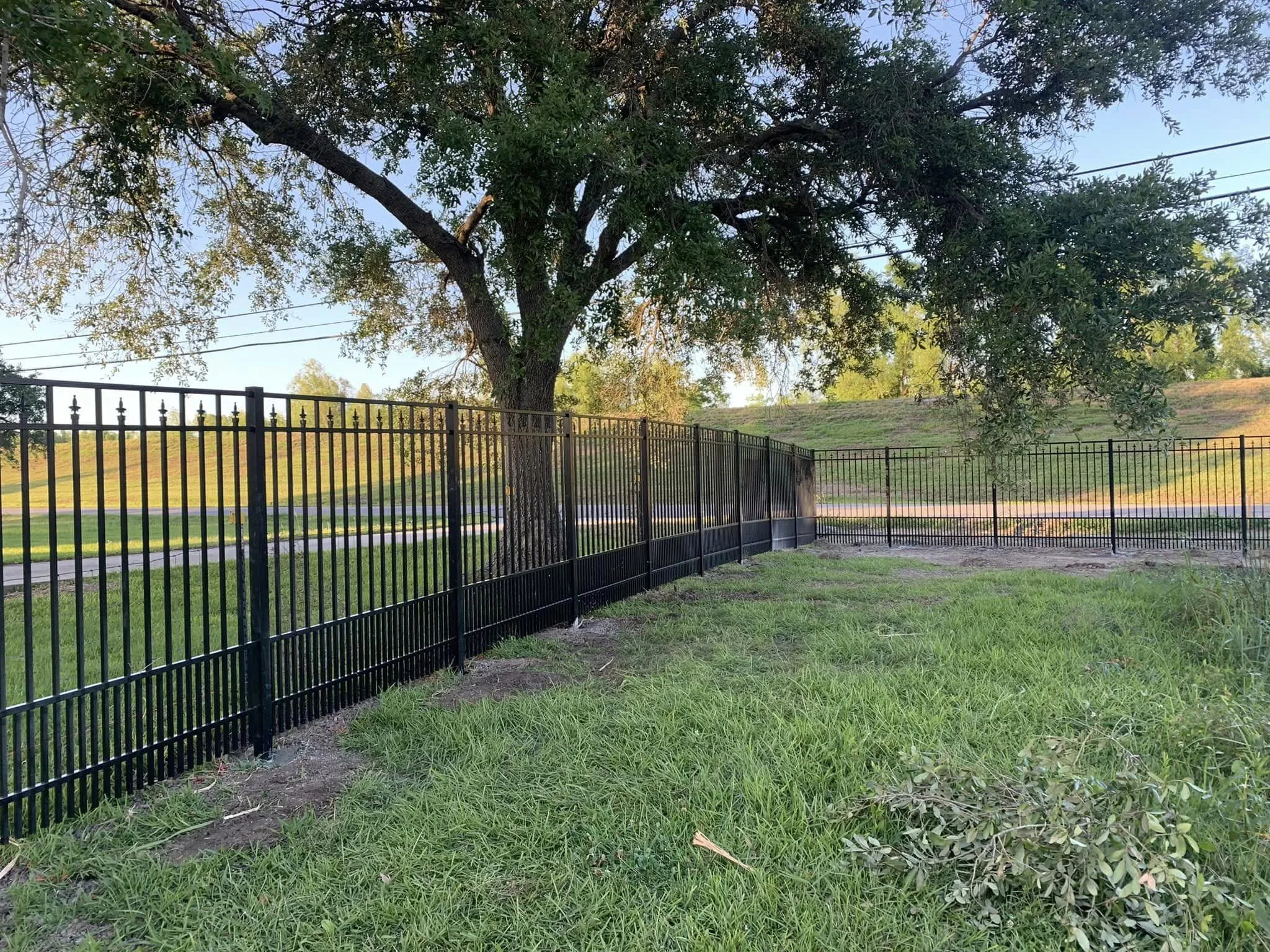
Wrought iron and ornamental iron-style fences are usually higher-investment projects because the final price depends on more than linear footage. In Baton Rouge, the cost can change based on the material being quoted, fence height, coating, gates, access control, soil conditions, humidity, permits, HOA rules, and whether the project uses true wrought iron, ornamental steel, or aluminum.
This is why two fence estimates can look very different even for the same property. One quote may include posts, gates, powder coating, removal, cleanup, and permit handling, while another may only reflect a basic per-foot installation. Before comparing prices, homeowners need to understand what the number includes.
This guide explains realistic cost ranges for wrought iron and ornamental iron fences in Baton Rouge, what drives prices up or down, and how to compare estimates without missing important project costs.
Installed wrought iron or ornamental iron fencing in Baton Rouge often ranges from $30 to $70+ per linear foot, depending on height, panel style, coating, gates, site conditions, and whether the design is standard or custom. Simpler projects may price lower, while custom ornamental work, taller panels, automation, or difficult installation can push costs higher. This broader range reflects variations in project complexity and local market conditions. These figures are planning ranges, not guaranteed quotes. Final pricing depends on current material costs, labor availability, site access, and the exact fence system quoted.
For a standard residential ornamental iron-style fence, many homeowners should expect the installed price to start at a higher level than basic wood or chain-link fences. A simple 4-foot design may be closer to the lower end of the range, while taller, heavier, decorative, powder-coated, or custom work can move well beyond mid-range pricing. Material-only costs for wrought iron often start around $25–$35 per linear foot, but installation, gates, coatings, and soil challenges add to that total.
Several major factors cause price fluctuations beyond the base material cost. Key drivers include:
Yes, wrought iron fences generally cost more than aluminum. Here's a quick general installed budget range comparison for Baton Rouge:
| Fence Type | General Installed Budget Range | Maintenance Notes | Best Fit |
| True Wrought Iron / Ornamental Steel | $30 - $70+ per linear foot | Highly durable; requires rust protection and periodic maintenance in humid climates | Strong boundary, classic appearance, custom designs, access-control options. |
| Aluminum | $20 - $50 per linear foot | Corrosion-resistant; lower maintenance than iron but can dent more easily than steel. | Lightweight, modern, susceptible to dents |
| Wood | $15 - $40 per linear foot | Requires regular treatment; less durable in humid or rainy conditions | Privacy, natural look, high maintenance |
Note: Ranges vary by fence height, gates, site conditions, and whether the quote includes removal of old fencing, permits, coatings, and hardware.
Property size directly influences total fencing costs because total linear feet increase. Larger properties require more material and labor, so costs scale with the perimeter length. However, large projects may benefit from bulk pricing or contractor discounts, offsetting the increased material costs.
Yes. Custom gates can add between $500 and several thousand dollars, depending on size, design complexity, and automation features. Specialty gates with electronic access or intercom systems add installation complexity and costs, often representing 10-20% of total fence expenses. Walk gates are less costly, whereas large driveways or automated gates require additional structural support, electrical wiring, and access-control hardware.
Baton Rouge’s soil tends to be clay-heavy and retains moisture, which can affect fence post stability and increase labor costs. Additional measures like deeper post holes, concrete footings, or drainage solutions may be necessary. Humidity also influences material choice, pushing homeowners toward corrosion-resistant coatings, which add to upfront costs. These conditions may also impact the choice of fasteners and hardware to prevent corrosion and ensure long-term durability. Before post holes are dug, request a utility locate to mark any buried lines.
Wrought iron fences provide strong security with sturdy iron bars and often feature decorative designs that enhance curb appeal, especially in neighborhoods with historic or upscale aesthetics. While the initial cost is higher than that of alternatives, the durability and classic look often provide long-term value and enhance the property's resale appeal.
To avoid unexpected expenses, consider the following:
Typical investment varies by property size and fence complexity. Below are rough budget ranges:
Before starting, ask your fence contractor these key questions to ensure clarity:
A wrought-iron or ornamental-iron fence in Baton Rouge is usually a higher-investment option because the final price depends on more than just linear footage. Height, panel weight, coating, gate size, automation, post setting, soil conditions, rust protection, permits, and HOA requirements can all affect the quote.
For a simple residential layout, a standard ornamental design may stay closer to the lower end of the price range. Custom gates, taller panels, decorative scrollwork, access control, old fence removal, or difficult site conditions can quickly increase the budget.
Before comparing bids, make sure each estimate includes the same materials, coating, posts, gates, hardware, permits, removal, and cleanup. Also confirm whether the fence is made of true wrought iron, ornamental steel, or aluminum, since each material has different costs, maintenance needs, weight, durability, and rust resistance. The more complete the estimate is from the start, the easier it is to avoid surprise costs during installation.
