What Fence Height Is Allowed in Baton Rouge Neighborhoods

Homeowners and businesses in Baton Rouge often ask how tall a fence can be before choosing materials, ordering panels, or scheduling installation. The answer is not always the same for every property. Fence height rules can depend on whether the property is inside the City of Baton Rouge limits, elsewhere in East Baton Rouge Parish, the zoning district, the fence location, the lot type, and any homeowners association or subdivision restrictions.

Front-yard fences, backyard privacy fences, corner-lot fences, pool barriers, and commercial security fences may all be treated differently. A fence that works on one property may need approval, adjustment, or a different design on another. This guide explains the common fence height considerations Baton Rouge property owners should review before installation, including front and backyard limits, permits, zoning, HOA rules, corner lots, commercial fencing, materials, visibility, and site conditions that can affect compliance. Before installation, confirm current requirements with the appropriate city-parish office, HOA, or governing body for your specific property.

What is the maximum fence height allowed in Baton Rouge neighborhoods?

Fence height limits typically differ between front and backyard locations to balance privacy, safety, and neighborhood aesthetics. While exact height limits vary by zoning district, lot type, and HOA rules, common practices include backyard fences not exceeding 6 feet and front-yard fences usually restricted to 3 to 4 feet to maintain visibility. Always confirm specific limits based on your property's location and regulations.

LocationCommon Fence Height LimitComments
BackyardOften up to 6 feetSubject to zoning district and lot-specific rules; provides privacy
Front yardTypically 3 to 4 feetEnsures visibility and neighborhood aesthetics; varies by zoning and lot type

Are front yard fence height limits different from backyard fence limits?

Yes, they usually differ to maintain safety and a sense of community. Backyards may allow taller fences for privacy, while front yards generally have lower maximum heights to preserve clear sight lines for drivers and pedestrians.

Why visibility requirements matter

Lower front-yard fences help maintain clear sightlines, especially on corner lots and near driveways, where local visibility rules apply.

Do you need a permit to build a fence in Baton Rouge?

Permit and approval requirements vary depending on fence height, location, materials, zoning, and function (such as pool barriers or commercial fencing). Verify current permit requirements with the City-Parish permitting office before construction or modifications to avoid penalties or delays. Permits may be required for new fences exceeding certain heights, modifications increasing fence height, or zoning exceptions.

How do zoning districts affect fence height regulations?

Zoning districts influence permissible fence heights, styles, and locations. Residential, commercial, mixed-use, and industrial zones enforce different limits and design standards tailored to safety and community needs. Some zones may require fences to match neighborhood character. Some commercial zones may allow taller fences, depending on zoning, use, screening requirements, security needs, and site visibility.

Can homeowners install a 6-foot privacy fence in Baton Rouge?

Many residential zones may allow fences up to 6 feet in backyards, but approval or permit requirements depend on zoning district, lot type, HOA rules, and project details. Front-yard installation of 6-foot fences is generally restricted due to safety concerns unless a variance is granted. Homeowners should consult local regulations, HOA rules, and obtain necessary permits before installation.

Are corner lots subject to different fence rules?

Yes, corner lots often have stricter rules to maintain traffic safety, including lower fence height limits within designated setback and sight triangle areas, as well as restrictions on fence opacity and design. Consult local ordinances carefully to avoid safety hazards.

Do HOA rules override city fence regulations?

HOA rules can be more restrictive than city or parish ordinances, imposing lower height limits or specific material and design standards to preserve neighborhood aesthetics. Homeowners must comply with both municipal regulations and HOA covenants.

What happens when HOA and city rules differ

Discrepancies require compliance with both public codes and HOA approval processes. Review HOA covenants and local regulations before installing a fence.

What happens if a fence exceeds the allowed height?

Non-compliance can lead to fines, enforcement actions, orders to modify or remove fences, and complications during property resale or disputes.

How can homeowners verify fence requirements before installation?

To ensure compliance, homeowners should:

Important considerations affecting fence height measurement and installation

Fence height measurement and installation can become more complicated when a property has slopes, retaining walls, gates, decorative features, or visibility requirements.

Commercial Fence Considerations in Baton Rouge

Commercial properties may have additional security, screening, visibility, and access-control requirements. Some commercial zones may allow taller fencing than residential areas depending on zoning, use, and approval.

How Do Baton Rouge Zoning Laws Impact Commercial Fence Installations?

Regulations consider zoning allowances, security features like barbed wire and access control, screening to minimize visual impact, visibility concerns near driveways/intersections, and permitting for materials, height, and placement.

Do Materials Affect Fence Approval in Baton Rouge?

Materials can influence approval depending on HOA, subdivision covenants, or design standards. Wood, vinyl, chain-link, ornamental metal, and security fencing may be acceptable in different contexts. Approval often factors in visibility, opacity, neighborhood standards, and security features.

Early planning can reduce the risk of delays, correction notices, neighbor disputes, or costly changes after installation.

How Should You Move Forward With a Baton Rouge Fence Project?

Fence height rules in Baton Rouge are not always based solely on height. Location, zoning district, front-yard or backyard placement, corner-lot visibility, HOA rules, easements, pool-barrier requirements, commercial use, and site conditions can all affect what is allowed.

Before moving forward, confirm the property line, review any HOA or subdivision rules, check for easements or utility servitudes, and verify whether a permit or approval is required. If the fence is near a driveway, intersection, retaining wall, slope, pool, or commercial access point, the layout may need closer review before materials are ordered.

A local fence contractor can help review the proposed fence height, layout, gate locations, access points, and installation conditions before work begins. For final code, permit, HOA, or property-line requirements, confirm with the appropriate city-parish office or governing body.

How Much Does a Wrought Iron Fence Cost in Baton Rouge?

Wrought iron and ornamental iron-style fences are usually higher-investment projects because the final price depends on more than linear footage. In Baton Rouge, the cost can change based on the material being quoted, fence height, coating, gates, access control, soil conditions, humidity, permits, HOA rules, and whether the project uses true wrought iron, ornamental steel, or aluminum.

This is why two fence estimates can look very different even for the same property. One quote may include posts, gates, powder coating, removal, cleanup, and permit handling, while another may only reflect a basic per-foot installation. Before comparing prices, homeowners need to understand what the number includes.

This guide explains realistic cost ranges for wrought iron and ornamental iron fences in Baton Rouge, what drives prices up or down, and how to compare estimates without missing important project costs.

How much does a wrought iron fence cost in Baton Rouge?

Installed wrought iron or ornamental iron fencing in Baton Rouge often ranges from $30 to $70+ per linear foot, depending on height, panel style, coating, gates, site conditions, and whether the design is standard or custom. Simpler projects may price lower, while custom ornamental work, taller panels, automation, or difficult installation can push costs higher. This broader range reflects variations in project complexity and local market conditions. These figures are planning ranges, not guaranteed quotes. Final pricing depends on current material costs, labor availability, site access, and the exact fence system quoted.

What is the average cost per linear foot for a wrought iron fence?

For a standard residential ornamental iron-style fence, many homeowners should expect the installed price to start at a higher level than basic wood or chain-link fences. A simple 4-foot design may be closer to the lower end of the range, while taller, heavier, decorative, powder-coated, or custom work can move well beyond mid-range pricing. Material-only costs for wrought iron often start around $25–$35 per linear foot, but installation, gates, coatings, and soil challenges add to that total.

What factors have the biggest impact on iron fence pricing?

Several major factors cause price fluctuations beyond the base material cost. Key drivers include:

Is wrought iron more expensive than aluminum fencing?

Yes, wrought iron fences generally cost more than aluminum. Here's a quick general installed budget range comparison for Baton Rouge:

Fence TypeGeneral Installed Budget RangeMaintenance NotesBest Fit
True Wrought Iron / Ornamental Steel$30 - $70+ per linear footHighly durable; requires rust protection and periodic maintenance in humid climatesStrong boundary, classic appearance, custom designs, access-control options.
Aluminum$20 - $50 per linear footCorrosion-resistant; lower maintenance than iron but can dent more easily than steel.Lightweight, modern, susceptible to dents
Wood$15 - $40 per linear footRequires regular treatment; less durable in humid or rainy conditionsPrivacy, natural look, high maintenance

Note: Ranges vary by fence height, gates, site conditions, and whether the quote includes removal of old fencing, permits, coatings, and hardware.

How does property size affect total fence cost?

Property size directly influences total fencing costs because total linear feet increase. Larger properties require more material and labor, so costs scale with the perimeter length. However, large projects may benefit from bulk pricing or contractor discounts, offsetting the increased material costs.

Do custom gates significantly increase the project budget?

Yes. Custom gates can add between $500 and several thousand dollars, depending on size, design complexity, and automation features. Specialty gates with electronic access or intercom systems add installation complexity and costs, often representing 10-20% of total fence expenses. Walk gates are less costly, whereas large driveways or automated gates require additional structural support, electrical wiring, and access-control hardware.

How do Baton Rouge soil and installation conditions affect pricing?

Baton Rouge’s soil tends to be clay-heavy and retains moisture, which can affect fence post stability and increase labor costs. Additional measures like deeper post holes, concrete footings, or drainage solutions may be necessary. Humidity also influences material choice, pushing homeowners toward corrosion-resistant coatings, which add to upfront costs. These conditions may also impact the choice of fasteners and hardware to prevent corrosion and ensure long-term durability. Before post holes are dug, request a utility locate to mark any buried lines.

Is a wrought iron fence worth the investment for security and curb appeal?

Wrought iron fences provide strong security with sturdy iron bars and often feature decorative designs that enhance curb appeal, especially in neighborhoods with historic or upscale aesthetics. While the initial cost is higher than that of alternatives, the durability and classic look often provide long-term value and enhance the property's resale appeal.

How can homeowners budget for an iron fence project without surprises?

To avoid unexpected expenses, consider the following:

What should Baton Rouge homeowners expect to invest in a wrought iron fence?

Typical investment varies by property size and fence complexity. Below are rough budget ranges:

Before starting, ask your fence contractor these key questions to ensure clarity:

Final thoughts on wrought iron fence costs in Baton Rouge

A wrought-iron or ornamental-iron fence in Baton Rouge is usually a higher-investment option because the final price depends on more than just linear footage. Height, panel weight, coating, gate size, automation, post setting, soil conditions, rust protection, permits, and HOA requirements can all affect the quote.

For a simple residential layout, a standard ornamental design may stay closer to the lower end of the price range. Custom gates, taller panels, decorative scrollwork, access control, old fence removal, or difficult site conditions can quickly increase the budget.

Before comparing bids, make sure each estimate includes the same materials, coating, posts, gates, hardware, permits, removal, and cleanup. Also confirm whether the fence is made of true wrought iron, ornamental steel, or aluminum, since each material has different costs, maintenance needs, weight, durability, and rust resistance. The more complete the estimate is from the start, the easier it is to avoid surprise costs during installation.

Hurricane-Ready Residential Wood Fence Installation: What Baton Rouge Homeowners Should Know

Hurricane season brings serious concerns for Baton Rouge homeowners, particularly regarding fence durability and property protection. Residential wood fence installation requires specific planning and materials to withstand Louisiana's intense weather patterns. Many homeowners underestimate the impact that hurricane-force winds can have on standard fencing systems.

At Secure Access LLC, we understand the unique challenges that Gulf Coast weather presents to fencing structures. Our team has witnessed firsthand how proper preparation and quality materials make the difference between a fence that survives the storm and one that becomes expensive debris. The investment in hurricane-ready fencing pays dividends when severe weather strikes our region.

Residential wood fence installation

Understanding Hurricane Threats to Wood Fencing

Wood fences are vulnerable to three major hurricane-related threats:

Hurricane-force winds create sustained pressure against fence panels, testing every connection point and support structure. The National Hurricane Center reports that Category 1 hurricanes produce winds between 74-95 mph, while Category 3 storms generate winds up to 129 mph.

Water damage compounds these challenges. Saturated soil reduces the holding power of fence posts, while excessive moisture accelerates wood deterioration. Standing water can remain for days after a storm passes, creating ideal conditions for rot and structural compromise.

Flying debris presents the most unpredictable threat. Storm-driven objects can strike wood fences with tremendous force, causing immediate structural failure. Branches, roof materials, and outdoor furniture become dangerous projectiles during hurricane conditions.

Pre-Season Fence Inspection Checklist

Property owners should conduct thorough fence inspections before hurricane season begins each year. This proactive approach identifies potential weak points before they become catastrophic failures during storms. Secure Access LLC offers professional pre-season inspections to help homeowners identify and address potential issues before storm season arrives.

Post Foundation Assessment

Check fence post stability by gently pushing against each post. Loose posts indicate compromised foundations that require immediate attention. Posts set in concrete typically provide better hurricane resistance than those installed with tamped earth backfill.

Examine the soil around post bases for signs of erosion or settling. Proper drainage around fence posts prevents water accumulation that weakens foundations. Consider installing French drains or grading adjustments to redirect water away from critical support areas.

Panel and Rail Evaluation

Inspect fence panels for loose boards, split rails, or failing fasteners. Wood privacy fences for homes require secure connections at every attachment point. Replace any corroded screws or nails with galvanized fasteners designed for exterior applications.

Look for signs of wood deterioration, including soft spots, discoloration, or insect damage. Early detection of structural issues allows for repairs before storm season arrives. Document problem areas with photographs to track deterioration over time.

Gate System Review

Test gate hardware, including hinges, latches, and support mechanisms. Gates experience additional stress during high winds due to their moving components. Lubricate hinges and adjust latches to prevent binding during emergencies.

Verify that gate posts are properly reinforced with concrete footings. Gate posts carry more weight than standard fence posts and require stronger foundations. Consider upgrading to heavy-duty hinges for gates wider than 4 feet.

Hurricane-Resistant Wood Fencing Materials

Material selection greatly impacts fence performance during severe weather events. Standard construction lumber may not provide adequate hurricane resistance without proper treatment and installation techniques.

Pressure-Treated Lumber Benefits

Pressure-treated wood offers superior moisture resistance compared to untreated lumber. The chemical treatment process penetrates deep into wood fibers, protecting against rot and insect damage. This enhanced durability becomes critical during extended exposure to hurricane conditions.

Southern Yellow Pine, commonly used for pressure-treated applications, provides good strength-to-weight ratios. This species handles Louisiana's climate conditions well while maintaining structural integrity under stress. Proper grading ensures consistent quality across all fence components.

Cedar and Hardwood Options

Western Red Cedar naturally resists moisture and insect damage without chemical treatment. Cedar's natural oils protect while maintaining an attractive appearance over time. However, cedar typically costs more than pressure-treated options and may require more frequent maintenance.

Hardwood species like oak or cypress offer superior strength but require specialized installation techniques. These materials provide excellent hurricane resistance but demand a higher initial investment. Consider hardwood applications for critical fence sections or gate installations.

Hardware and Fastener Selection

Galvanized hardware resists corrosion in Louisiana's humid climate. Stainless steel fasteners provide the highest corrosion resistance for long-term performance. Avoid aluminum hardware in coastal areas where salt exposure accelerates deterioration.

Hurricane clips and reinforcement brackets add structural strength to standard connections. These specialized fasteners distribute wind loads across multiple attachment points. Install additional bracing at corners and gate locations where stress concentrations occur.

Strategic Design Modifications for Storm Resistance

Custom wood fencing design can incorporate specific features that improve hurricane performance. Standard fence configurations may require modifications to meet Louisiana's challenging weather conditions.

Panel Configuration Adjustments

Solid fence panels create maximum wind resistance and generate high-pressure loads. Incorporating spacing between boards reduces wind load while maintaining privacy. A 10-15% gap ratio considerably decreases wind pressure without compromising security.

Horizontal board installations may provide better hurricane performance than vertical orientations. Horizontal configurations distribute loads differently and may experience less stress concentration. However, this approach affects drainage and may not suit all architectural styles.

Post Spacing and Depth Considerations

Standard 8-foot post spacing may require a reduction in high-wind areas. Decreasing spacing to 6 feet provides additional structural support during extreme weather. This modification increases material costs but improves overall fence stability to a great extent.

Post depth becomes critical for hurricane resistance. Installing posts at least 30% deeper than standard recommendations improves holding power. For 6-foot fences, consider 3-foot post depth with concrete footings extending below the frost line.

Decorative Wood Fence Design Modifications

Decorative wood fence design elements require careful consideration for hurricane applications. Ornate tops, lattice work, and decorative panels create additional wind resistance and potential failure points.

Simplify decorative elements while maintaining aesthetic appeal. Streamlined designs reduce wind catch while preserving property value enhancement. Consider removable decorative sections that can be stored during storm warnings. Custom wood fencing allows for personalized design modifications that balance hurricane resistance with visual appeal.

Professional Installation Techniques

Proper installation techniques matter more than material selection for hurricane resistance. Amateur installations frequently fail during severe weather due to inadequate foundations or poor fastening practices. At Secure Access LLC, our professional installation standards have been refined through 15+ years of Louisiana hurricane seasons.

Foundation Requirements

Concrete footings provide superior holding power compared to tamped earth installations. Mix concrete to 3000 PSI minimum strength for fence post applications. Allow full 28-day curing before subjecting installations to stress loads.

Footing diameter should be at least three times the post width. Wider footings distribute loads over larger soil areas and resist uplift forces. Consider bell-bottom footing shapes for additional holding power in sandy soils.

Fastener Installation Standards

Pre-drill all screw holes to prevent wood splitting during installation. Splitting wood around fasteners creates stress concentrations that lead to failure. Use appropriate drill bit sizes based on screw specifications.

Install fasteners at slight downward angles to shed water away from connection points. This technique prevents water accumulation that leads to fastener corrosion. Apply exterior-grade wood glue at critical connections for additional holding power.

Decade-Long Performance Success Case Study & Client Review

Beverly Galler's experience with Secure Access LLC demonstrates the long-term value of quality hurricane-resistant installations. After ten years of Louisiana weather exposure, her original fencing required matching additions that presented unique challenges.

"We wanted fencing to match what Secure Access installed here a decade ago, which meant—among other issues—finding matching finials, dealing with the changed land level, and cutting several posts to meet the height of the old ones. Nick and his team faced these challenges in a creative and professional manner, and gave us an attractive finished product. They also serviced our existing drive-through gate while they were here. Ryan and Nick and the Secure Access team provide high-quality products and service, and we will gladly recommend them to anyone who is looking for a fencing contractor."

This case study illustrates how proper initial installation creates long-term value through sustained performance. The original fence survived multiple hurricane seasons while maintaining its structural integrity and appearance. Our 5 out of 5 Google review record reflects consistent delivery of this level of quality and service.

The land level changes mentioned in this testimonial highlight another hurricane consideration. Stormwater and erosion can alter property grades over time, affecting fence alignment and drainage patterns. Professional installation accounts for these long-term changes through proper design and materials selection.

Affordable Wood Fencing Solutions for Hurricane Preparation

Hurricane-ready wood fencing doesn't require premium materials for every application. Strategic upgrades to critical areas can noticeably improve overall system performance while managing project costs.

Priority Area Identification

Focus upgrade investments on fence sections that face prevailing storm winds. The National Weather Service indicates that Louisiana typically experiences hurricane winds from the southeast. Strengthen fence sections on the property's southeast boundaries first.

Corner posts and gate installations carry higher loads and deserve priority attention. These structural anchor points support the entire fence system during extreme weather. Invest in premium materials and installation techniques for these critical locations.

Phased Improvement Approach

Consider multi-year improvement plans that spread costs over several seasons. Annual upgrades to specific fence sections build hurricane resistance gradually while managing budget constraints. Document improvements to track progress and plan future phases.

Start with foundational improvements like post reinforcement and drainage enhancement. These modifications provide immediate benefits and support future panel upgrades. Add decorative wood fence design elements and premium materials in later phases as the budget allows.

Maintenance Schedules for Hurricane Readiness

Regular maintenance prevents minor issues from becoming major failures during storm events. Develop annual maintenance schedules that prepare fencing systems for each hurricane season. Affordable wood fencing solutions include maintenance programs that protect your investment without costly emergency repairs.

Spring Preparation Tasks

Conduct thorough inspections after winter weather exposure. Louisiana's freeze-thaw cycles can create new stress points in wood fencing systems. Replace damaged fasteners and repair loose boards before storm season arrives.

Apply fresh protective coatings to exposed wood surfaces. Quality exterior stains or sealers provide moisture protection that becomes critical during extended storm exposure. Choose products specifically designed for Louisiana's climate conditions.

Post-Storm Assessment Procedures

Document storm damage immediately after weather events pass. Photograph damage for insurance purposes and prioritize repairs based on structural importance. Address safety hazards as the top priority, then focus on security and appearance issues.

Check fence foundations for settlement or movement after major storms. Saturated soils may allow post movement that compromises overall system stability. A professional assessment may be necessary for significant foundation issues.

Emergency Storm Preparation Steps

Hurricane warnings provide limited time for fence protection activities. Prepare action plans in advance to maximize preparation efficiency when storms threaten the area. At Secure Access LLC, we provide emergency consultation services to help homeowners implement rapid protection measures when hurricane warnings are issued.

Removable Element Storage

Identify fence components that can be quickly removed and stored. Gate hardware, decorative panels, and loose boards should be secured or removed before storm arrival. Pre-drill storage locations to speed removal processes.

Create storage systems for removed components in protected areas. Garage or storage building space should be allocated for fence components during storm warnings. Label storage areas clearly to facilitate post-storm reinstallation.

Temporary Reinforcement Options

Install temporary bracing at weak points when storm warnings are issued. Diagonal braces can considerably improve panel stability during high winds. Use readily available lumber and fasteners for quick installation.

Consider temporary panel removal in extreme situations. Complete panel removal eliminates wind resistance but requires significant labor and storage space. Reserve this option for Category 4 or 5 hurricane threats.

Working with Professional Fence Contractors

Professional installation and maintenance provide the best hurricane preparation results. Experienced contractors understand local conditions and building codes that affect fence performance.

At Secure Access LLC, our decade and a half of experience in Louisiana includes numerous hurricane seasons and their aftermath. We understand which materials and techniques provide the best performance in our specific climate conditions. Our industry-leading warranties reflect confidence in our hurricane-resistant installation methods for wood privacy fences for homes throughout the Baton Rouge area.

Licensed and insured contractors protect against installation defects and weather-related failures. Proper licensing indicates knowledge of local building codes and permit requirements. Insurance coverage protects property owners from liability during installation and future service calls.

Residential wood fence installation

Protect Your Investment Before the Next Storm Hits

Ready to protect your property with hurricane-resistant wood fencing? Contact Secure Access LLC  at (225) 481-9863 to schedule your consultation and discover our affordable wood fencing solutions for your home.

Hurricane-ready residential wood fence installation protects property values while providing security and privacy. The investment in quality materials and professional installation pays dividends through reduced storm damage and lower long-term maintenance costs. Custom wood fencing solutions designed for Louisiana conditions provide the best combination of performance, appearance, and value for Baton Rouge homeowners facing annual hurricane threats.

DIY Residential Wood Fence Installation vs. Professional Contractors: Complete Cost Analysis

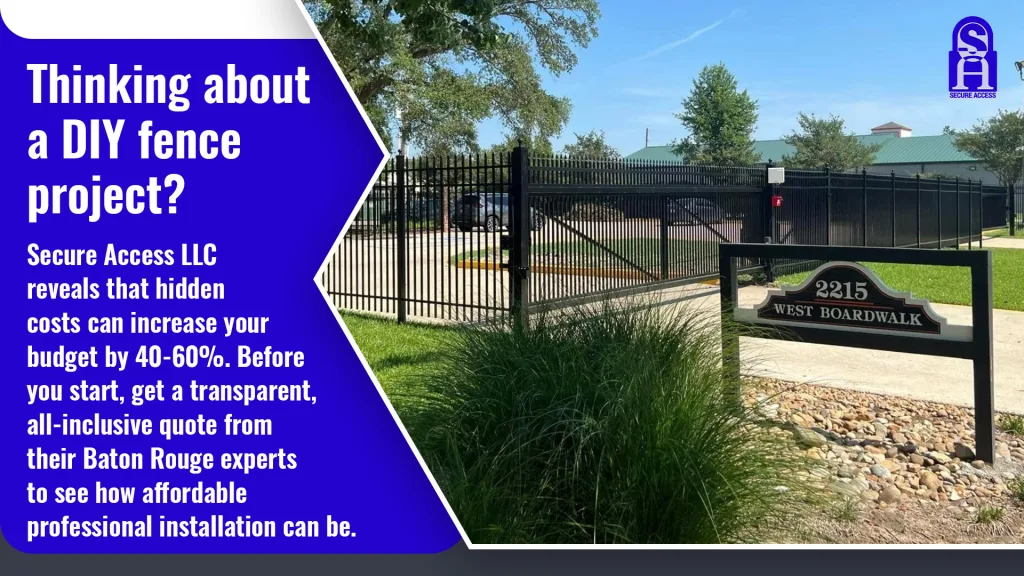
How about installing a wood fence yourself to save money? Many homeowners start DIY projects with that goal, but hidden costs, extra materials, permitting, and rework often erase the savings. This guide compares typical DIY vs. professional residential wood fence installation costs, timelines, and risks so you can decide which route actually saves you time and money.

Your choice isn't just about the immediate bill; it affects your long-term property value and your sanity. Before you grab that post-hole digger, let's explore why choosing a professional is the smarter, more secure path to a beautiful, code-compliant fence.

privacy fence installation

What Hidden Expenses Are Destroying DIY Fencing Budgets?

Permitting and Compliance Costs

Local permits cost $50-200, but violations can reach $5,000 in fines. Most DIY installers skip permit applications to save money. Code violations require complete fence removal and reinstallation at full expense.

Baton Rouge requires permits for fences over 6 feet or within property setbacks. Homeowner associations add design restrictions that complicate permit approval. Professional contractors handle all permitting requirements as part of their service pricing.

Tool and Equipment Expenses

Tool rental costs $200-500 per project for basic equipment needs. DIY installers need post hole diggers, laser levels, concrete mixers, and power tools. Equipment purchase costs exceed $800 for quality tools that support proper installation.

Secure Access LLC includes all specialized equipment in project quotes. Our tool investment spreads across hundreds of installations annually. This approach reduces per-project costs while maintaining professional quality standards.

Material Waste and Overruns

DIY projects waste 15-25% more materials than professional installations. Incorrect measurements, cutting errors, and damaged boards increase material costs substantially. Retail lumber pricing adds 20-30% to material expenses compared to contractor trade pricing.

Professional contractors calculate exact material requirements based on site surveys. We account for standard waste factors and order materials at wholesale pricing. This combination reduces total material costs despite higher labor expenses.

When Does DIY Wood Fence Installation Actually Make Financial Sense?

Small Project Parameters

DIY works for fences under 100 linear feet on level ground with simple designs. Short picket fences, garden borders, and temporary barriers suit DIY installation methods. These projects require minimal specialized knowledge and basic tool requirements.

Flat terrain eliminates post depth calculations and drainage considerations. Simple designs reduce measurement errors and assembly complications. Property line disputes rarely affect small decorative installations.

Tool Ownership Benefits

Homeowners with existing tools reduce DIY project costs by $200-400. Post hole diggers, circular saws, and levels represent major rental expenses. Tool ownership makes DIY projects more competitive with professional pricing.

Previous construction experience reduces learning curves and installation time. Skilled homeowners complete simple projects without major errors or rework requirements.

What Are the Key Advantages of Professional Fence Installation?

Speed and Efficiency Benefits

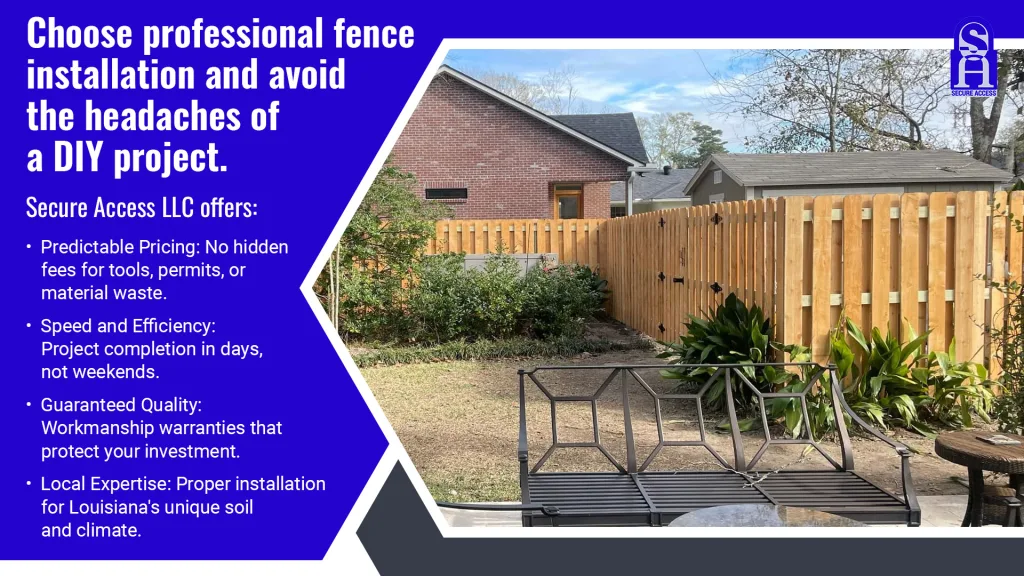
Professional teams complete residential wood fence installation in 1-3 days versus 2-4 weekends for DIY. Experienced installers work efficiently with minimal weather delays. Project completion speed reduces material exposure to damage and theft.

Secure Access LLC schedules installations based on weather forecasts and material delivery timing. Our systematic approach minimizes disruption to homeowners' daily routines. Quick completion prevents project abandonment during busy periods.

Quality Control Standards

Professional installations meet industry standards for post depth, spacing, and alignment. Laser levels maintain fence line accuracy across property boundaries. Proper concrete mixing ratios prevent post-shifting and structural failure.

Quality control checklists verify installation steps before project completion. These procedures eliminate common errors that require expensive corrections later. Professional warranties protect homeowners against workmanship defects.

How Does the Total Cost of DIY Compare to Professional Installation?

The following costs approximately apply to a standard 200 linear foot residential wood fence installation:

Cost ComponentDIYProfessional
Material Cost$2,500–$6,000$2,000–$5,500
Time2–4 weekends 1–3 days
Labor$0 (personal effort)$2,000–$4,500
Consolidated Total Cost$2,500–$6,000$4,000–$10,000

(Source: Homeguide)

Choosing DIY eliminates paid labor and typically saves $1,500–$4,500 on a standard residential fence. But expect to invest 40–60 hours of your time, and to pay $200–$500 or even more for tool rentals or purchases. Once you add permits, material waste, potential rework, and site preparation, total DIY costs can escalate, in some cases reaching $11,450 when all expenses are accounted for.

What Are the Most Common (and Costly) DIY Wood Fence Installation Errors?

Post Installation Problems

Incorrect post depth causes 60% of DIY fence failures within 18 months. Louisiana clay soil requires posts buried at least one-third of fence height plus 6 inches. Shallow posts shift during freeze-thaw cycles and wind loading.

Posts spaced over 8 feet apart create sagging and structural weakness. Standard residential wood fence installation requires 6-8 foot post spacing, depending on fence height. Wider spacing saves materials but compromises long-term durability.

Concrete mixing ratios affect post stability for decades. Weak concrete allows post movement during weather changes. Professional contractors use specific concrete formulations for Louisiana soil conditions.

Alignment and Measurement Issues

Property line surveys prevent expensive relocation projects after installation. Many DIY installers assume property boundaries without professional verification. Incorrect placement requires complete fence removal and reinstallation.

Fence height measurements must account for ground slope variations. Level fences on sloped ground create gaps and appearance problems. Professional teams use laser levels to maintain consistent fence height across terrain changes.

What Should Homeowners Consider When Planning Custom Wood Fencing?

Design Complexity Factors

Custom wood fencing requires specialized installation techniques and materials. Decorative elements, multiple wood species, and integrated features increase project complexity. Professional installation becomes necessary for complex custom designs.

Design modifications during installation create additional costs and delays. Professional contractors provide detailed drawings and specifications before construction begins. This planning prevents expensive changes during installation work.

Material Selection Impact

Cedar and redwood cost 40-60% more than pine but last twice as long. Material selection affects both installation techniques and maintenance requirements. Different wood species require specific fastening methods and finishing procedures.

Wood privacy fences for homes benefit from premium materials that resist rot and insect damage. Secure Access LLC recommends appropriate materials based on budget constraints and maintenance preferences.

What Decorative Wood Fence Design Options Are Available for My Home?

Popular Decorative Elements

Lattice panels, post caps, and trim work add $15-30 per linear foot to installation costs. Decorative wood fence design requires precise measurements and specialized fastening techniques. These elements demand professional installation for proper appearance and durability.

Popular decorative features include:

Installation Complexity

Decorative elements double installation time and require specialized skills. Complex cuts, multiple materials, and finishing work exceed typical DIY capabilities. Professional installers have experience with decorative techniques and proper tool requirements.

Custom millwork and special orders extend project timelines significantly. Secure Access LLC coordinates material delivery timing to prevent installation delays. Our scheduling accounts for decorative element complexity and weather requirements.

What Are the Most Affordable Wood Fencing Solutions on the Market?

Financing and Payment Options

Financing programs make professional installation accessible within monthly budgets. Payment plans spread costs over 12-60 months with competitive interest rates. Monthly payments often cost less than accumulated DIY expenses and tool purchases.

Secure Access LLC offers multiple financing options through established lending partners. Pre-approval processes provide budget certainty before project planning begins. Flexible payment terms accommodate various financial situations.

Value Engineering Approaches

Strategic material selection reduces costs without compromising quality. Mixed wood species, standard heights, and simplified designs provide affordable wood fencing solutions. Professional contractors identify cost-saving opportunities during planning phases.

Phased installation approaches divide large projects into manageable budget segments. Property sections can be completed over time while maintaining overall design integrity. This strategy helps homeowners manage cash flow requirements effectively.

How Do Insurance and Warranty Protections Differ for DIY vs. Professional Jobs?

Liability Coverage Requirements

Professional contractors maintain $1-2 million liability insurance for property protection. DIY installations leave homeowners responsible for damage to neighboring properties or utility lines. Insurance claims from DIY accidents can exceed project savings substantially.

Workers' compensation coverage protects homeowners from injury claims during installation work. Secure Access LLC provides insurance certificates documenting full coverage levels. This protection eliminates homeowner liability for installation-related incidents.

Workmanship Warranties

Professional warranties cover structural defects and installation problems for 2-5 years. Warranty coverage includes post-replacement, board repairs, and hardware adjustments. DIY installations provide no recourse for future problems or failures.

Warranty claims receive prompt response and professional repair services. These protections maintain fence appearance and functionality throughout warranty periods. Extended warranty options provide additional coverage for premium installations.

How Will My Project Timeline and Scheduling Be Affected by My Choice?

Professional Installation Process

Site surveys and permit applications typically require 1-2 weeks before installation begins. Material ordering and delivery coordination add 3-5 days to project timelines. Actual installation work completes within 1-3 days for standard residential projects.

Weather delays affect both DIY and professional installations equally. Professional contractors reschedule efficiently to minimize disruption. Our flexible scheduling accommodates homeowner preferences and seasonal timing requirements.

DIY Project Duration

DIY fence projects typically require 4-8 weekends for completion, depending on experience level. Learning curves, equipment familiarization, and error correction extend timelines substantially. Weather interruptions can delay DIY projects for weeks or months.

Incomplete projects create security and aesthetic problems for extended periods. Professional installation eliminates prolonged construction disruption to family routines and neighborhood appearance.

What Local Market Considerations Should Baton Rouge Homeowners Keep in Mind?

Baton Rouge Area Expertise

Local soil conditions and climate factors affect installation techniques throughout Louisiana. Clay soil drainage, humidity levels, and storm exposure require specialized approaches. Secure Access LLC has 15+ years of experience with local installation challenges.

Municipal code requirements vary between Baton Rouge parishes and incorporated areas. Professional contractors maintain current knowledge of local permitting and inspection requirements. This expertise prevents costly compliance problems during and after installation.

The Voice of Satisfied Customers

Don't just take our word for it; listen to what your Baton Rouge neighbors are saying about the professional fence installation difference!

When you choose a professional installer, you aren't just buying a fence; you're investing in reliable service and peace of mind. Our recent customer feedback consistently highlights the value of quality and customer support:

"Prompt service and follow up! Thanks." — Angela Discon

"Absolutely the best in the Baton Rouge area." — Marc Mader

These testimonials reflect the direct benefit of a predictable, warrantied process. Professional fence installation creates satisfied customers by ensuring consistent quality standards, delivering on time, and providing the critical follow-up and warranty support that a DIY job can't offer. 

privacy fence installation

DIY or Pro: How Do I Make the Right Choice for My Fence Project?

Decision Framework

Choose professional installation for projects over 150 linear feet, sloped terrain, or custom designs. Complex projects require specialized knowledge and equipment that exceed DIY capabilities. Professional expertise prevents costly errors and helps maintain code compliance.

Select DIY for simple projects under 100 feet on level ground with basic designs. Small decorative fences, garden borders, and temporary installations suit DIY methods. Tool ownership and construction experience improve DIY project success rates.

Ready to Build Your Perfect Fence? Here Are Your Next Steps.

You now know the pitfalls of DIY and the value of professional service. Your next steps are all about getting the most accurate information to make a smart, learned decision:

  1. Gather Initial Information: Start by taking rough property measurements and conducting initial permit research for your local area. This provides a clear project scope.
  1. Get Multiple Quotes: Secure a few different professional quotes to establish accurate pricing comparisons. Remember, site-specific factors, from soil type to terrain, often determine the most cost-effective installation approach.

Contact Secure Access LLC Today

Ready to skip the DIY headaches and get a transparent, professional estimate?

Contact Secure Access LLC at (225) 481-9863 for detailed estimates on custom wood fence installation in Baton Rouge. Our free consultations include a thorough site evaluation, expert material recommendations, and transparent pricing for all project components.

We specialize in high-quality wood privacy fences for homes throughout the Baton Rouge area and provide reliable, affordable solutions designed to fit your budget and specific design preferences.

Call us today to secure your free consultation and take the first step toward a beautiful, worry-free fence!

Residential Wrought Iron Fence Installation in Baton Rouge: Permits, Property Lines, and HOA Rules

Key Takeaways:

Residential wrought iron fence installation means following city rules on permits, height limits, and placement. Homeowners should be aware of these requirements before starting any project.

We at Secure Access LLC handle thousands of residential wrought iron fence installation projects. Our team handles the complex permit process while you focus on choosing the perfect custom iron fencing for homes. Property owners face multiple requirements, from city permits to property surveys. Smart homeowners work with licensed contractors who understand these regulations completely.

Iron security fences for residential properties

Do You Need a Permit for Residential Wrought Iron Fence Installation?

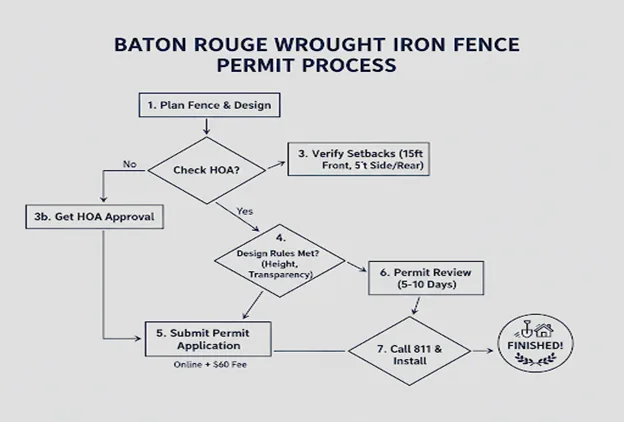
Yes, you need a permit for residential wrought iron fence installation in Baton Rouge. The city  requires permits for all fence installations, regardless of height or material type.

The permit requirement applies to:

Permit Application Process

Submit your permit application. The minimum permit fee starts at $60 for residential fence projects.

Iron security fences for residential properties


Required documents include:

Height Restrictions for Residential Fences

Residential fences can be built up to a maximum of 8 feet in height. Front yard fences, however, must meet visibility requirements: any section taller than 4 feet needs to maintain at least 70% transparency to allow for clear street views and emergency access.

Side and backyard fences may reach the full 8-foot limit since they are subject to fewer visibility rules. For front yards, wrought iron is a popular option because its open design naturally meets transparency standards while also providing security and curb appeal.

Property Surveys and Boundary Disputes

Before starting any fence installation, it’s critical to verify your exact property boundaries. A professional survey, typically costing $300–800, ensures fences are placed correctly and helps prevent costly disputes with neighbors. Licensed surveyors provide certified documentation, review property deeds, and place physical markers to establish clear lines.

Clear boundaries also protect against legal conflicts. Louisiana law treats boundary fences as common property, meaning neighbors may share responsibility for maintenance. Open communication with adjacent property owners, sharing design plans, confirming boundary lines, and documenting agreements, can prevent misunderstandings. If disputes arise, mediation or a survey is far less expensive than legal action.

By addressing surveys and disputes together, homeowners protect their property rights and maintain good neighbor relationships while ensuring compliance with local regulations.

HOA Approval Process for Decorative Iron Fences

Submit architectural review applications to your HOA before starting any fence project. HOA approval often takes 30-60 days for review and decision.

Common HOA Restrictions

Review your community's covenants for specific fence guidelines. Many HOAs regulate fence height, color, and design elements.

Typical HOA requirements include:

Architectural Review Committee Process

Provide detailed plans including fence design, materials, and installation timeline. Complete applications receive faster approval than incomplete submissions.

Required HOA documents:

Material Requirements and Restrictions

East Baton Rouge Parish allows wrought iron fencing in all areas except Downtown character zones. Chain link faces geographic restrictions, while wrought iron has broader acceptance.

Approved Materials

Wrought iron fencing receives approval throughout most parish areas. These materials meet durability and appearance standards.

Durable wrought iron fencing offers:

Prohibited Materials

Barbed wire and concertina wire are prohibited in residential areas. These materials are restricted to rural livestock applications only. Our Iron security fences for residential properties meet all parish regulations while providing maximum durability.

Project Costs & Value

Planning ahead for both costs and timelines helps homeowners avoid surprises. Permit fees typically range from $60–200, with approvals taking 5–10 business days. Complex projects may require more time for surveys, inspections, or HOA approvals.

Overall, expect a 5 week project timeline, which includes permits, property surveys, material ordering, and installation. Weather conditions and material availability can also impact scheduling.

Installation costs generally fall between $25–60 per linear foot, depending on fence height, design complexity, and site conditions. Additional expenses may include surveys, site preparation, and inspection fees.

While upfront costs vary, quality wrought iron fencing delivers excellent long-term value. These fences often last 20–30 years with minimal maintenance, boosting both property value and curb appeal. By working with licensed contractors, homeowners get accurate estimates, streamlined approvals, and durable results.

Code Compliance and Inspection Requirements

Schedule required inspections during the fence installation process. Building inspectors verify proper installation techniques and code compliance.

Required Inspections

Foundation and post installation inspections occur before fence panel installation. Inspectors check post depth, concrete work, and structural elements.

Inspection checkpoints:

Common Code Violations

Avoid violations by working with licensed contractors familiar with local requirements. Common mistakes include improper setbacks and height violations.

Frequent violations include:

Secure Access LLC maintains perfect inspection records through detailed code knowledge and quality installation practices.

Utility Easement Considerations

Identify utility easements before fence placement to avoid conflicts. Gas, electric, and water utilities maintain access rights to easement areas.

Call Before You Dig

Contact Louisiana 811 before any excavation work. Utility marking prevents dangerous accidents and expensive repairs.

Required steps:

Easement Restrictions

Avoid placing fences within utility easements without written permission. Utility companies can require fence removal for maintenance access. Our custom iron fencing designs work around utility restrictions.

Maintenance Requirements and Warranties

Schedule annual inspections to maintain fence condition and warranty coverage. Proactive maintenance prevents rust and extends fence life.

Routine Maintenance

Clean and inspect fences twice yearly for ideal performance. Louisiana humidity requires attention to rust prevention and protective coatings.

Maintenance tasks:

Warranty Coverage

Quality installations include comprehensive warranty protection. Secure Access LLC provides industry-leading warranties on all residential wrought iron fence installation projects.

Our warranty covers:

Working with Professional Fence Contractors

Choose licensed contractors with local permit experience for the best results. Professional installation guarantees code compliance and warranty protection.

Contractor Selection Criteria

Verify contractor licenses, insurance, and local references before hiring. Licensed contractors understand permit requirements and installation standards.

Selection factors:

Why Work with Secure Access LLC

At Secure Access LLC, we simplify the entire fence installation process by managing every step from start to finish. Our team handles:

With over 15 years of experience and consistent 5-star reviews, we’re trusted by homeowners to deliver durable wrought iron fencing with zero regulatory headaches. Our expertise guarantees compliance, prevents costly mistakes, and helps projects finish on time and within budget.

Iron security fences for residential properties

Case Study On Overcoming Regulatory Challenges

Project Overview: A homeowner needed decorative iron fences for the front and backyard areas.

Challenges Faced:

Secure Access LLC Solution: Our team conducted a professional survey that identified exact easement boundaries and worked with the city to obtain easement permissions. 

Project Timeline:

Results: The project was completed on schedule with zero code violations. Final inspection passed on the initial review, and the homeowner avoided potential $2,000+ in easement violation fines.

Client Outcome: The durable wrought iron fencing provides 20+ years of expected service life with minimal maintenance requirements.

Get Started with Your Residential Wrought Iron Fence Project

Residential wrought iron fence installation in Baton Rouge requires careful attention to permits, property lines, and community regulations. Working with experienced contractors like Secure Access LLC helps achieve compliance with all requirements while delivering beautiful, durable results.

Custom iron fencing for homes provides security, privacy, and architectural appeal when installed properly. We handle the complex regulatory requirements so you can focus on enjoying your new decorative iron fences.

Contact us for high-quality iron security fences for residential properties. Our team manages permits, surveys, and installation for complete project success.

Custom Wood Fencing Upgrades to Boost Baton Rouge Home Value

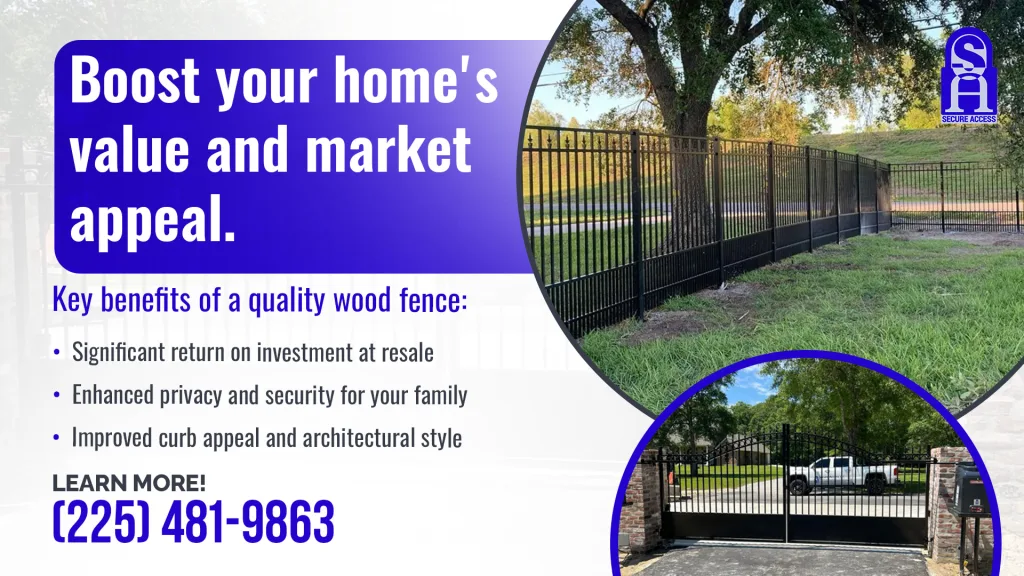
Residential wood fence installation projects are more than just upgrades; they’re one of the smartest ways Baton Rouge homeowners can boost curb appeal and property value. When executed with quality materials and professional techniques, these projects can increase home values by 5-10%. The right fence doesn’t just provide privacy; it transforms how buyers and neighbors see a home, delivering a measurable return on investment.

At Secure Access LLC, we help homeowners maximize their property investment through targeted fencing upgrades that appeal to today's buyers. Our experience with custom wood fencing demonstrates which improvements provide the highest returns while enhancing daily living experiences. The key lies in selecting upgrades that balance aesthetic appeal, functionality, and long-term durability in Louisiana's climate.

Residential wood fence installation

Understanding Home Value Impact of Fencing Improvements

When valuing residential properties, property appraisers take into account the style, quality, and condition of the fence. In times of market competition, well-maintained fence systems can affect buyer decisions and enhance the overall appearance of a home.

At resale, exterior upgrades usually recoup 60–80% of their cost. When fencing projects meet particular buyer goals like privacy, security, and aesthetic enhancement, they frequently surpass these averages. Old or broken fencing can be strategically upgraded to create attractive selling points.

Location within Baton Rouge influences which fencing upgrades deliver the greatest value. Higher-value neighborhoods often yield stronger returns from premium fencing, while family-oriented areas tend to prioritize privacy and security features in wood privacy fences for homes.

Wood Fencing Design Elements That Add Value

Unique design features distinguish properties from comparable homes and create memorable impressions for potential buyers. Custom wood fencing allows homeowners to incorporate elements that reflect architectural styles while meeting functional requirements.

Architectural Integration Approaches

Fence designs that complement home architecture create cohesive property aesthetics that buyers appreciate. Traditional Colonial homes benefit from picket-style designs, while Contemporary properties suit horizontal board configurations. This integration demonstrates attention to detail that sophisticated buyers recognize.

Color coordination between fencing and the home exterior enhances the overall visual impact. Natural wood stains that complement siding colors create harmonious appearances without overwhelming landscapes. Neutral tones typically appeal to broader buyer demographics than bold color choices.

Decorative Wood Fence Design Features

Decorative elements add character without excessive maintenance requirements that concern buyers. Post caps, lattice work, and trim details create visual interest while maintaining practical functionality. These features demonstrate quality craftsmanship that justifies premium pricing.

Gate designs serve as focal points that create strong first impressions for visitors and buyers. Arched gates, decorative hardware, and matching pedestrian gates elevate entire fence installations. Professional installation ensures these elements function properly for years.

Buyer Appeal Factors of Wood Privacy Fences for Homes

Privacy features rank among the top buyer priorities in residential surveys, particularly for families with children or home-based businesses. Wood privacy fences for homes provide both functional benefits and psychological comfort that buyers value.

Height and Coverage Considerations

Six-foot privacy fencing provides adequate screening for most residential applications without appearing fortress-like. Taller sections around specific areas like pools or patios address privacy needs while maintaining neighborhood compatibility. Varied heights create visual interest while serving different functional purposes.

Board spacing affects both privacy levels and airflow through fence sections. Tight spacing maximizes privacy while slight gaps prevent wind damage during storms common in Louisiana. Professional installation optimizes spacing for climate conditions.

Material Quality and Longevity

Premium lumber grades demonstrate quality that buyers recognize during property inspections. Pressure-treated Southern Yellow Pine performs well in Louisiana's climate while remaining cost-effective. Cedar options provide natural beauty but require higher maintenance commitments.

Proper installation techniques protect investments and minimize future maintenance costs. Concrete footings, galvanized hardware, and proper drainage extend fence life significantly. Buyers appreciate fencing that won't require immediate replacement or repairs.

Affordable Wood Fencing Solutions for Maximum ROI

Strategic upgrade approaches maximize value impact while managing project budgets effectively. Affordable wood fencing solutions allow homeowners to enhance properties without overcapitalizing in current market conditions.

Phased Improvement Strategies

Priority area improvements provide immediate visual impact while spreading costs over time. Front yard fencing creates curb appeal that influences buyer first impressions most directly. Additional sections can be added as budgets allow while maintaining design consistency.

Replacement of damaged sections addresses immediate concerns while planning broader upgrades. Partial replacements using matching materials maintain visual continuity until full upgrades become feasible. This approach prevents deterioration that could negatively impact property values.

Cost-Effective Design Modifications

Simple design changes can dramatically improve appearance without extensive reconstruction. Adding post caps, trim boards, or stain treatments refreshes existing fencing at minimal cost. These improvements demonstrate maintenance attention that buyers value.

Hardware upgrades like decorative hinges and latches enhance functionality while improving aesthetics. Quality gate hardware operates smoothly and creates positive impressions during property showings. Professional installation ensures proper function and longevity.

Home Value Enhancement Data and Market Analysis

Exterior improvements, including fencing, consistently outperform interior renovations in terms of buyer appeal and resale value.

Property Value Correlation Analysis

Homes with professional wood privacy fences usually spend on average 15% less time on the market. This reduced marketing time translates to lower carrying costs and less negotiation pressure.

Appraisal reports consistently note fencing quality as a contributing factor to property valuations. Well-maintained custom wood fencing adds $3,000-$8,000 to appraised values, depending on property size and neighborhood. These increases often exceed project costs when professionally executed.

Professional Installation Impact on Home Value

Quality installation techniques directly affect both the immediate appearance and the long-term performance that buyers evaluate. Amateur installations often create liability concerns that reduce rather than increase property values.

Foundation and Structural Standards

Proper post-installation prevents future settling and alignment issues that concern home inspectors. Concrete footings extending below the frost line provide stability that lasts decades in Louisiana soil conditions. Professional installation includes drainage provisions that prevent water damage.

Level installation creates a professional appearance that buyers associate with quality throughout the property. Precise alignment and consistent spacing demonstrate attention to detail that influences buyer perceptions. These factors affect willingness to pay premium prices.

Hardware and Fastener Quality

Galvanized and stainless steel hardware resists Louisiana's humid climate better than standard alternatives. Premium fasteners prevent rust stains and structural failures that create negative impressions. Professional installation includes hardware selection appropriate for local conditions.

Gate hardware requires particular attention since buyers test functionality during property tours. Smooth operation and secure latching create positive impressions, while binding or broken hardware raises concerns. Regular maintenance preserves these critical first impression elements.

Maintenance Schedules That Preserve Value

Regular maintenance schedules protect fencing investments and maintain positive buyer impressions throughout ownership periods. Neglected maintenance can transform value-adding features into liability concerns during sales processes.

Annual Care Requirements

Spring inspections identify winter damage before it becomes expensive structural problems. Replace loose boards, tighten hardware, and address drainage issues promptly to maintain appearance. Document maintenance activities to demonstrate care to potential buyers.

Protective coatings preserve wood appearance and prevent premature deterioration in Louisiana's climate. Annual stain or paint applications maintain color consistency and weather protection. Quality products designed for Southern climates provide better longevity than standard formulations.

Long-Term Preservation Strategies

Component replacement schedules prevent complete system failures that require expensive emergency repairs. Replace individual boards and hardware as needed rather than deferring maintenance until reconstruction becomes necessary. Proactive approaches maintain consistent appearance and functionality.

Professional maintenance services can preserve warranties and ensure proper techniques. Secure Access LLC provides ongoing maintenance programs that protect initial investments while maintaining optimal appearance. These services often transfer to new owners as valuable property features.

Customer Success Stories

Real customer experiences demonstrate the value and satisfaction our residential wood fence installation services provide throughout the Baton Rouge area.

Courtney Roedel shares her experience: "This was our second experience with Ryan and his team at Secure Access, and once again, they did a fantastic job. They replaced our gate opener and automated the gate with care and attention to detail. High-quality work and excellent service—highly recommended!"

Matt Dupré provides additional perspective: "Ryan and his team were very professional! They did a great and timely job on the privacy fence. They also had the best price around!! I would and will use them again!"

These testimonials reflect our commitment to customer satisfaction and professional service delivery. Our team at Secure Access LLC understands that residential wood fence installation represents a significant investment requiring expert installation and ongoing support.

Frequently Asked Questions About Wood Fence Value Improvements

  1. How much value does a new wood fence add to my home?

Quality residential wood fence installation typically increases property values by 5-10% of the project cost. Actual returns depend on neighborhood characteristics, fence quality, and current market conditions. Privacy fencing in family-oriented neighborhoods often exceeds average return rates.

  1. Which wood fence styles provide the best return on investment?

Wood privacy fences for homes consistently provide the highest returns due to buyer demand for privacy and security. Wood fencing with decorative elements appeals to buyers seeking unique features. Simple, well-executed designs typically outperform elaborate installations in broad market appeal.

  1. Should I repair existing fencing or install a new wood fence in Baton Rouge?

Extensive repairs often cost more than replacement while providing inferior results and buyer appeal. New installations allow design improvements and warranty protection that buyers value. Secure Access LLC provides honest assessments of repair versus replacement economics.

  1. How do I choose the right fencing company for value-focused improvements?

Look for contractors with local experience, proper licensing, and demonstrated expertise with residential wood fence installation. Quality installation directly affects both appearance and longevity, which determine value impact. References from recent customers provide insight into satisfaction and results.

Working with Secure Access LLC for Value-Maximizing Upgrades

The team at Secure Access LLC brings extensive experience to every project. We understand which improvements provide maximum value impact while respecting budget constraints and timeline requirements. This knowledge helps homeowners make informed decisions about fencing investments.

Professional consultation identifies opportunities for value enhancement through strategic upgrades. We assess existing conditions, property characteristics, and neighborhood factors to recommend improvements with the highest return potential. Our proposals include a detailed cost-benefit analysis for decision-making support.

Project management services coordinate installations to minimize disruption while ensuring quality results. Secure Access LLC handles permits, material sourcing, and installation scheduling to deliver projects on time and within budget. This thorough approach reduces stress while protecting investment returns.

Residential wood fence installation

Environmental Considerations and Sustainable Practices

Wood fencing provides environmental benefits through carbon sequestration and renewable resource utilization. According to the USDA Forest Service, wood products store carbon throughout their service lives while requiring less energy to produce than alternative materials.

Sustainable forestry practices ensure long-term availability of quality lumber for residential applications. Local sourcing reduces transportation environmental impact while supporting regional economies. These factors appeal to environmentally conscious buyers in today's market.

Proper maintenance extends service life and reduces replacement frequency, which benefits the environment and property values. Well-maintained decorative wood fence design features can provide decades of service with appropriate care. This longevity makes wood fencing a cost-effective and environmentally responsible choice.

Getting Started with Value-Adding Wood Fence Improvements

Successful improvements start with understanding your property, neighborhood, and personal preferences. At Secure Access LLC, we handle surveys, permits, and code compliance in Baton Rouge, ensuring smooth installations without delays. Our design consultations balance aesthetics, functionality, and resale value, helping you choose the right custom wood fencing for your home.

Ready to boost your home value with quality wood fence improvements? Contact Secure Access LLC at (225) 481-9863 to schedule your consultation and discover how affordable wood fencing solutions can transform your property while maximizing investment returns.

How Much Does a Residential Fence Installation Cost in Baton Rouge?

Planning privacy fence installation in Baton Rouge often leads to confusion about realistic pricing expectations. Property owners frequently encounter dramatic price variations between contractors for identical projects, creating uncertainty about appropriate budget planning. Residential fence installation in Baton Rouge typically costs from $15 to $50 per linear foot, depending on materials, height, style, and site conditions.

At Secure Access LLC, we understand the frustration of unclear pricing in the fencing industry. Our 15+ years of experience serving the Baton Rouge community have taught us that transparent pricing information helps homeowners make better decisions and avoid costly surprises. Customers often ask us detailed questions about costs, materials, and installation processes, and we always try to provide clear, honest answers. This guide covers the major concerns and questions we hear most often. It breaks down every factor that affects your residential fence installation costs. This helps you budget effectively and select the best solution for your property.

Understanding these cost factors becomes particularly important given Baton Rouge's unique climate conditions and local regulations. Louisiana's humid subtropical climate, clay soil composition, and specific municipal requirements all influence installation methods and material choices. Many homeowners discover that the cheapest initial quote often leads to higher long-term costs due to poor material quality or inadequate installation techniques. Our goal is to help you understand what drives fence installation pricing so you can make ideal decisions that provide lasting value for your investment.

What Makes Some Fence Installations So Much More Expensive Than Others?

Customer Question: "I got quotes ranging from $2,000 to $8,000 for the same fence project. Why such a huge difference?"

Great question! Several key factors dramatically impact your final costs, and learning about these helps explain quote variations.

Material Selection Makes the Biggest Difference

We often tell customers that material choice accounts for 60-70% of their total project cost. Here's what you can expect:

Wood fencing represents the most popular choice for residential fence installation in Baton Rouge, with costs ranging from $15 to $50 per linear foot installed. Cedar and pine dominate our installations, with cedar commanding premium pricing due to its natural resistance to Louisiana's humid climate.

Vinyl fencing costs between $20 & $60 per linear foot for installation. This material gains popularity among Baton Rouge homeowners seeking low-maintenance options that withstand our region's weather extremes. We frequently recommend vinyl for customers prioritizing long-term value.

Aluminum fencing typically costs $25 to $75 per linear foot installed. This option works well for decorative applications and properties requiring visibility while maintaining boundaries. Many of our installations feature aluminum around pool areas due to safety requirements.

Chain link fencing offers the most budget-friendly option at $10 to $40 per linear foot. While less aesthetically appealing, this material provides solid security and durability for larger properties or utility areas.

Height Requirements Add Significant Costs

Customer Question: "Does fence height really make that much difference in price?"

Absolutely! Standard residential fences measure 4 to 6 feet in height. Each additional foot of height adds approximately $3 to $8 per linear foot to your total project cost. Privacy fence installation commonly specifies 6-foot heights, maximizing privacy while staying within typical municipal regulations.

We regularly install 8-foot fences for customers requiring enhanced privacy or security. These installations require additional permitting and structural considerations, increasing material and labor costs accordingly.

Your Property's Terrain Affects Installation Complexity

Customer Question: "My yard has a slope. Will that increase my costs?"

Unfortunately, yes. Flat, accessible properties allow for standard installation pricing. Sloped terrain requires stepped or racked installation techniques that increase labor time and material waste. Our team evaluates each property to provide accurate cost estimates, accounting for these challenges.

Properties with limited access for equipment may require hand-digging post holes instead of mechanical augering. This manual approach increases labor costs by 20 to 30 percent compared to standard installations.

Can You Break Down Costs by Specific Fence Types?

Customer Question: "I'm considering different materials but need specific numbers to make my decision."

We're happy to provide detailed breakdowns based on our current Baton Rouge market pricing.

Wood Fence Installation Costs

Customer Question: "What's the real cost difference between cedar and pine fencing?"

Cedar privacy fencing costs $22 to $28 per linear foot installed in the Baton Rouge area. This premium material resists rot and insect damage common in Louisiana's climate. A typical 150-linear-foot cedar privacy fence installation ranges from $3,300 to $4,200.

Pine fencing offers a more economical option at $15 to $20 per linear foot installed. While requiring more maintenance than cedar, pine provides an attractive appearance and solid performance when properly treated. At Secure Access LLC, we apply quality sealers and stains to extend the pine fence’s lifespan.

Pressure-treated lumber adds $2 to $4 per linear foot to base wood costs but greatly improves durability in Louisiana's humid environment. Most residential fence installations benefit from this treatment option.

Vinyl Fence Installation Costs

Customer Question: "Is vinyl really worth the higher upfront cost?"

We think so, especially for Louisiana's climate. Vinyl privacy fencing averages $28 to $35 per linear foot installed for quality materials and professional installation. This cost includes posts, panels, gates, and hardware. A 150-linear-foot vinyl privacy fence typically costs between $4,200 and $5,250.

Semi-privacy vinyl styles cost $22 to $30 per linear foot, offering partial visibility while maintaining boundary definition. These styles work well for front yard applications where complete privacy isn't necessary.

Decorative vinyl fencing ranges from $20 to $28 per linear foot for picket and ornamental styles. These options enhance curb appeal while providing property boundary definition.

Aluminum Fence Installation Costs

Customer Question: "I want something decorative but durable. What about aluminum?"

Aluminum makes an excellent choice for many applications. Residential aluminum fencing costs $25 to $35 per linear foot for standard heights and styles. Our Baton Rouge fence company specializes in custom aluminum installations that complement architectural styles throughout the area.

Ornamental aluminum designs increase costs to $30 to $45 per linear foot due to specialized manufacturing and installation requirements. These premium options provide outstanding durability and aesthetic appeal for upscale properties.

Pool fencing requirements add safety features and specific height requirements that typically cost $28 to $40 per linear foot. Louisiana pool safety regulations mandate specific gate hardware and self-closing mechanisms.

What About All Those 'Hidden' Costs Nobody Mentions?

Customer Question: "I keep hearing about extra costs that contractors don't mention upfront. What should I expect?"

We appreciate this question because transparency matters. Here are the additional costs many contractors don't clearly explain:

Permits and Inspections

Fence installation in Baton Rouge should always include proper permitting to avoid legal issues and maintain code compliance. Residential fence installations require permits for most projects. Permit costs range from $50 to $150, depending on fence height and location. 

At Secure Access LLC, we take care of all permitting requirements to provide a hassle-free experience. Our experience with local regulations helps streamline approvals and keep projects on schedule.

Gate Installation Adds Significant Value and Cost

Customer Question: "How much extra will gates cost me?"

Single gates add $150 to $400 to your project cost, depending on size and material. Double gates for driveways range from $300 to $800 installed. Gate hardware quality considerably affects longevity and operation, making professional installation important for long-term satisfaction.

Automated gate systems increase costs by $800 to $2,500 depending on features and complexity. These systems require electrical connections and specialized hardware that our team professionally installs.

Site Preparation Can Surprise You

Customer Question: "My yard looks pretty straightforward. Could there still be site prep costs?"

Possibly. Properties requiring significant site preparation face additional costs. Tree removal, grading, or utility line marking can add $200 to $1,000 to your project budget. We provide detailed site evaluations to identify these requirements early in the planning process.

Existing fence removal costs $3 to $8 per linear foot, depending on material and disposal requirements. Many customers combine removal with new installation to streamline their project timeline.

Why Should I Pay for Professional Installation Instead of DIY?

Customer Question: "I'm pretty handy. Can't I just install the fence myself and save money?"

We understand the appeal of DIY projects, but fence installation involves more complexity than many homeowners realize.

Proper Foundation Work Makes All the Difference

Customer Question: "How important is the foundation work really?"

Critical! Professional residential fence installation in Baton Rouge includes proper post-hole depth and concrete setting according to local soil conditions. Louisiana's clay soil and high water table require specific installation techniques that DIY installations often overlook.

We dig post holes to appropriate depths (typically 24 to 30 inches for 6-foot fences) and use proper concrete mixtures for long-term stability. This foundation work prevents fence failure and maintains straight, attractive fence lines.

Code Compliance Protects Your Investment

Customer Question: "What happens if my DIY fence doesn't meet local codes?"

Potentially expensive corrections! Local building codes specify setback requirements, height restrictions, and structural standards that affect installation methods. Our licensed team understands these requirements and guarantees all installations comply with or exceed local standards.

Property line surveys become important for fence installations to avoid encroachment issues. We work with customers to verify boundaries and obtain necessary easements when required.

Warranty Protection Saves Money Long-Term

Customer Question: "Do I lose warranty coverage with DIY installation?"

Yes, typically. Professional installation provides warranty coverage for both materials and workmanship. Secure Access LLC offers industry-leading warranties that protect your investment and provide lasting confidence for years after installation.

DIY installations void material warranties and leave homeowners responsible for all future repairs or replacements. Professional installation preserves these protections while ensuring proper installation techniques.

When's the Best Time to Install a Fence for Cost Savings?

Customer Question: "Does timing affect my fence installation costs?"

Absolutely! Strategic timing can save you money.

Peak Season Pricing

Spring and early summer represent peak seasons for residential fence installation in Baton Rouge. Demand during these months can increase costs by 10 to 20 percent compared to off-season installations.

Fall and winter installations often provide cost savings and faster scheduling. Louisiana's mild winters allow year-round fence installation, making off-season timing attractive for budget-conscious customers.

Weather-Related Considerations

Customer Question: "What about Louisiana's unpredictable weather?"

Louisiana's weather patterns can affect installation schedules and costs. Hurricane season may cause delays or require rescheduling, particularly for large projects. We monitor weather forecasts and communicate proactively with customers about potential delays.

Heavy rain periods can make installation difficult in clay soil areas common throughout Baton Rouge. We adjust schedules accordingly to support quality installation conditions.

How Much Would I Really Save with DIY Installation?

Customer Question: "Give me the honest numbers on DIY versus professional installation."

We'll give you straight facts. DIY privacy fence installation projects typically save 40 to 60 percent on total costs but require significant time investment and skill development.

Material Costs Only

Material costs for DIY projects range from $8 to $25 per linear foot, depending on fence type and quality. However, these costs don't include necessary tools, permits, or potential mistakes requiring material replacement.

Hidden DIY Costs Add Up

Customer Question: "What costs do DIY projects usually overlook?"

Tool rental or purchase adds $200 to $800 to DIY projects. Post-hole diggers, levels, saws, and concrete mixers represent necessary equipment for quality installations.

Permit applications and inspections still apply to DIY installations. Many homeowners underestimate the time requirements for permit approval and inspection scheduling.

Mistake correction can dramatically increase DIY costs. Improperly set posts, incorrect spacing, or poor concrete work may require professional correction, eliminating initial savings.

How Do I Get an Accurate Estimate for My Project?

Customer Question: "What's the best way to get reliable cost estimates?"

Start with a professional consultation. Contact fence contractors near you, including Secure Access LLC, to get detailed project estimates. Comparing multiple quotes is always recommended. Our consultation process covers site evaluation, helps with material selection, and provides detailed cost breakdowns.

We provide written estimates that detail all project components, including materials, labor, permits, and timeline expectations. This transparency helps customers choose wisely and budget appropriately.

Comparing Different Contractor Bids

Customer Question: "How should I evaluate different contractor quotes?"

Quality fence installations require experienced contractors with proper licensing and insurance. When comparing bids from different Baton Rouge fence companies, consider reputation, warranty terms, and project timeline alongside pricing.

Extremely low bids often indicate corner-cutting on materials or installation quality. Our competitive pricing reflects fair value for quality materials and professional installation services.

What Financing Options Are Available?

Customer Question: "The costs are higher than I expected. Do you offer payment plans?"

We understand fence installation represents a significant investment. Secure Access LLC offers flexible payment options to help customers manage project costs. We work with homeowners to develop payment schedules that align with their budget requirements and project timeline.

We also partner with financing companies to provide additional options for our customers:

Many customers prefer staged payments that align with project milestones. This approach provides budget predictability while ensuring work progress meets expectations.

Home Improvement Financing

Customer Question: "Should I look into home improvement loans?"

Many financial institutions offer home improvement loans specifically for projects like fence installation. These loans often provide favorable terms for property improvements that add value.

Credit card financing may work for smaller projects, but it typically carries higher interest rates than dedicated home improvement financing options.

How Can I Get the Best Value from My Fence Investment?

Customer Question: "I want quality that lasts. What should I prioritize?"

Smart question! Choosing quality materials for residential fence installation provides better long-term value despite higher upfront costs. We help customers evaluate the total cost of ownership, including maintenance and replacement considerations.

Premium materials like cedar wood or quality vinyl may cost more initially but require less maintenance and last longer than economy options. This longevity provides better value over the fence's lifetime.

Professional Maintenance Extends Fence Life

Customer Question: "What maintenance should I expect after installation?"

Regular maintenance extends fence life and preserves appearance. We provide maintenance recommendations specific to your fence material and local climate conditions.

Annual inspections identify potential issues before they become expensive repairs. Simple maintenance tasks like cleaning, staining, or hardware adjustments noticeably extend fence lifespan.

Ready to Start Your Fence Project?

Customer Question: "I'm ready to move forward. What's the next step?"

Residential fence installation costs in Baton Rouge range from $15 to $45 per linear foot based on material selection, height requirements, and site conditions. Professional installation supports code compliance, warranty protection, and long-term performance that DIY projects often lack.

As a trusted Baton Rouge fence company, Secure Access LLC provides transparent pricing, quality materials, and skilled installation services backed by our industry-leading warranties. Our ample years of experience serving Baton Rouge residents guarantee your fence project meets expectations and provides lasting value.

Ready to discuss your residential fence installation project? Contact our team at (225) 481-9863 or email info@secureaccessllc.com for a thorough consultation and detailed project estimate. Let us help you choose the perfect fencing solution for your property and budget.